
Last updated November 25, 2026
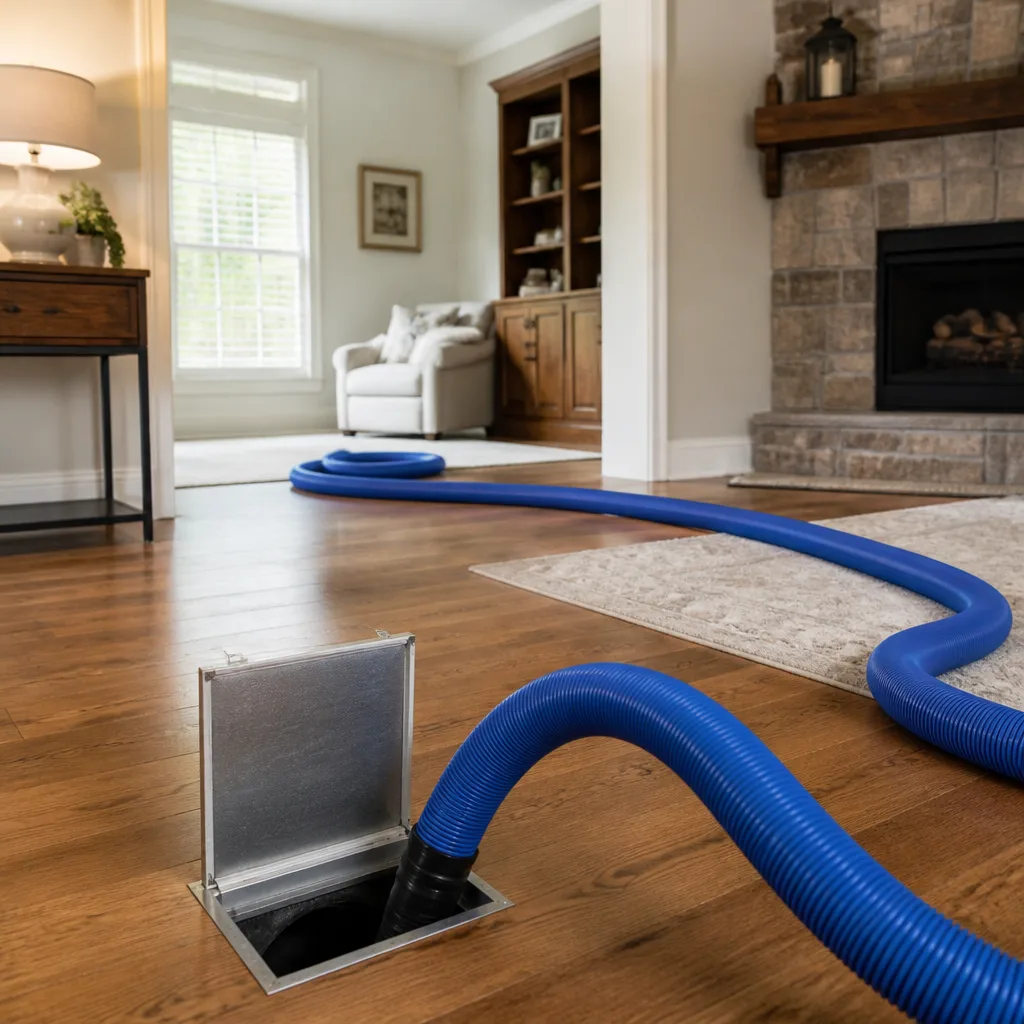 Whole-home duct cleaning
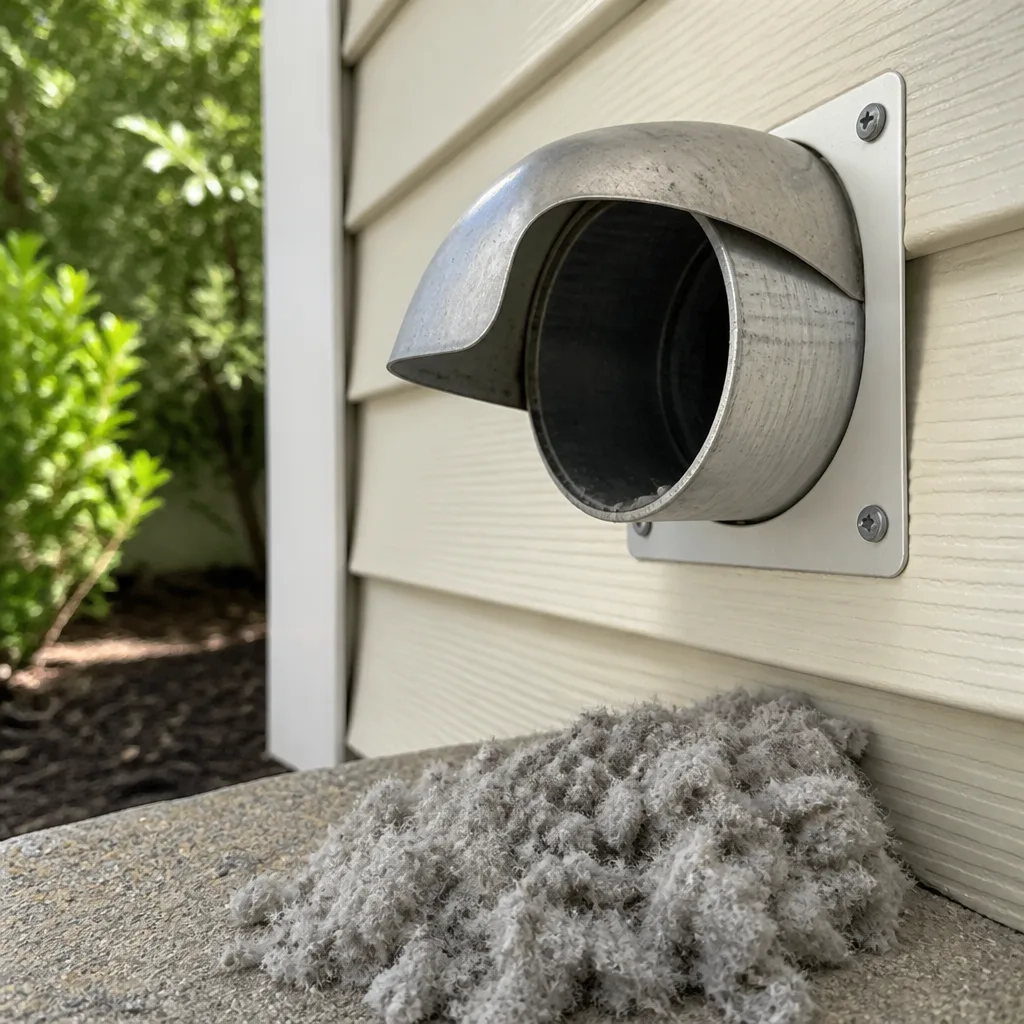 Dryer vent cleaning
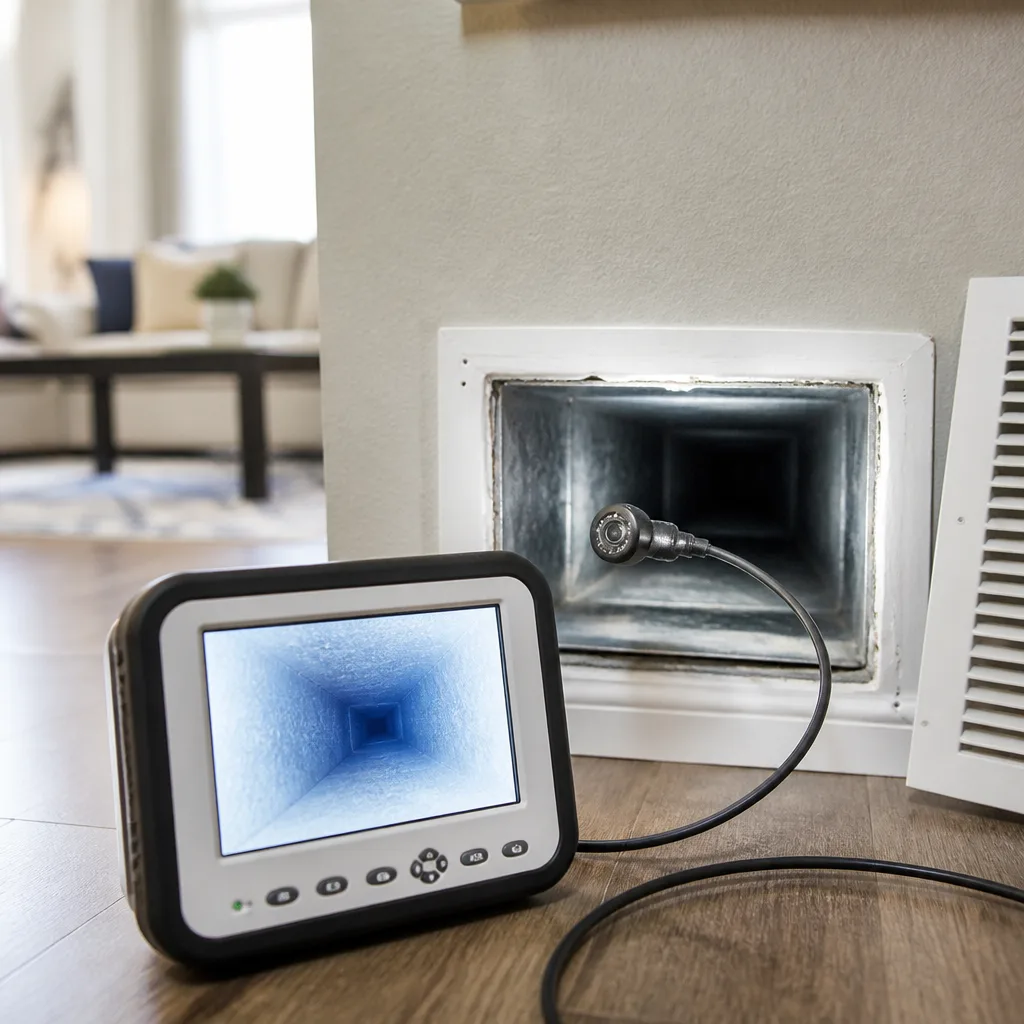 Camera inspection
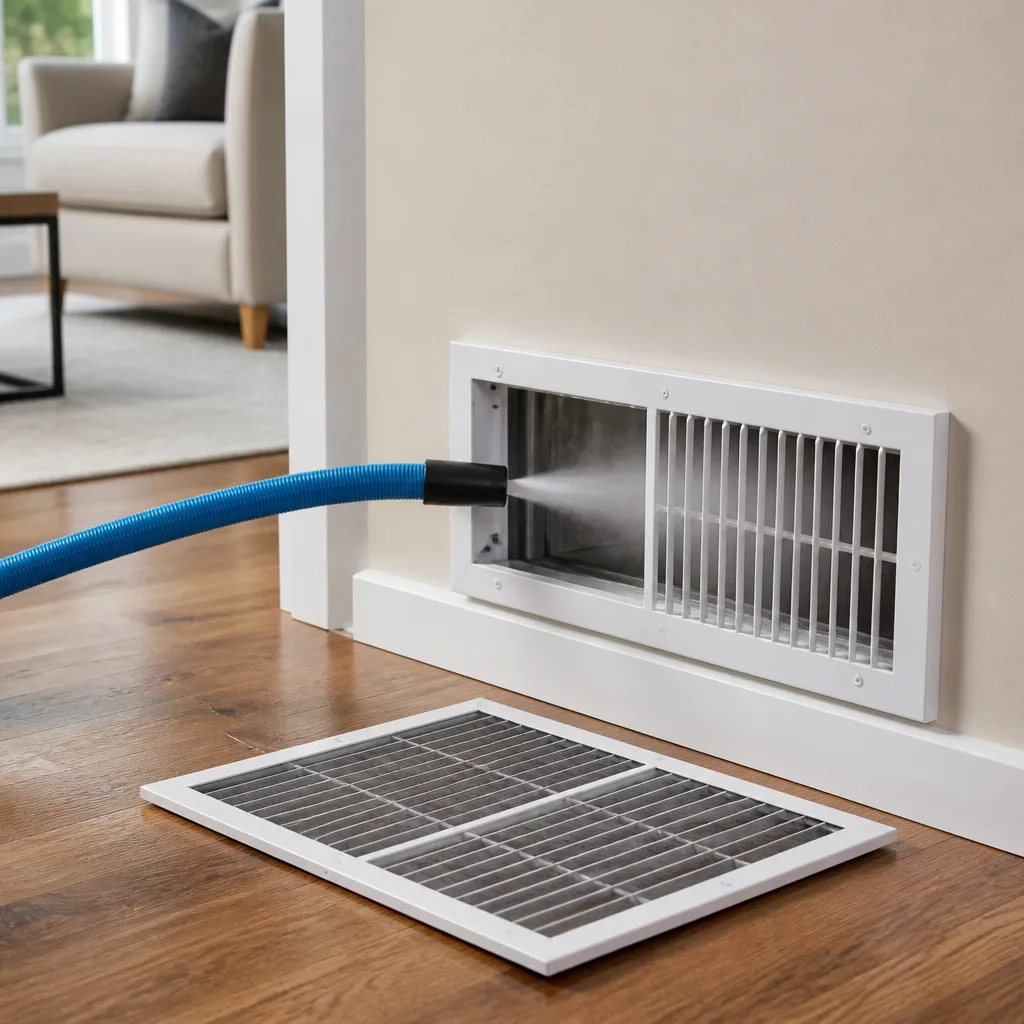 Sanitizing & deodorizing
Whole-system duct and dryer vent check with before-and-after photos - you see exactly what came out of your vents
That "$99 whole-house special" is a bait ad - the real number appears once they are in your hallway, or the "clean" is a shop-vac at the register. We photograph the inside of your ducts before and after instead.
Air Duct Cleaning Maintenance Checklist for Rhawnhurst Homeowners
Most duct maintenance checklists are repackaged HVAC filter reminders. Change the filter, vacuum the vents, done. That advice misses the thing that actually matters in Rhawnhurst housing stock: flex duct installed before 2000 has a habit of collapsing at the joints, and once it sags, debris collects in a low pocket no cleaning machine can reach until a technician physically repositions the run. You can run the fan all day and the loose dust in that sag stays put. This guide walks through a maintenance checklist built around that reality – monthly, quarterly and annual tasks tied to how often your system actually runs, how to read your own register boots without dismantling anything, what a collapsed flex run looks like from the floor, humidity benchmarks for Philadelphia-area winters and summers, and how to keep a simple log so a technician can spot a trend instead of a snapshot.
Quick Answer
A workable air duct maintenance checklist for a Rhawnhurst home runs on three cycles: monthly visual checks of register boots and filter condition, quarterly inspection of return grilles and condensate areas, and an annual professional cleaning and inspection timed to the end of high-use season. The checklist only works if you log what you see, because duct problems in this climate build slowly and show up as trends, not single events.
Styles & brands we work with
- Whole-home duct cleaning
- Dryer vent cleaning
- Camera inspection
- Sanitizing & deodorizing
Table of Contents
- Why Standard Duct Checklists Fail Rhawnhurst Homes
- The Monthly Checklist: Tasks Tied to Run Cycles
- The Quarterly Checklist: What to Check and When
- The Annual Checklist and When to Schedule Cleaning
- How to Inspect Register Boots Without Removing Anything
- Signs Your Flex Duct Has Collapsed (and Why It Defeats Cleaning Equipment)
- Humidity Benchmarks for Philadelphia-Area Winters and Summers
- How to Keep a Duct Log That Actually Helps a Technician
Why Standard Duct Checklists Fail Rhawnhurst Homes
Rhawnhurst sits in a stretch of Northeast Philadelphia built out heavily in the decades after World War II, and a lot of that housing still runs on the duct systems installed when the homes were new or updated in the 1980s and 1990s. Those systems are usually flex duct – a corrugated inner liner wrapped in insulation – hung from joists in unfinished basements and crawlspaces. Flex is fast to install and quieter than sheet metal at the register, which is why it was everywhere. It’s also the component that fails first, and it fails in a specific way: the liner sags between hangers, the inner core pinches at each joint, and the run gradually loses its round shape.
Why does that matter for a maintenance checklist? Because every generic checklist assumes your ducts are rigid and cleanable from end to end. In a Rhawnhurst home with pre-2000 flex, a rotary brush head can’t push through a pinch point. A HEPA vacuum can’t pull debris out of a low pocket if the debris is sitting behind a collapsed length. The machine is fine. The duct geometry is the problem. Any checklist worth following has to include the inspection steps that catch collapse early, before the cleaning equipment gets stopped by it.
Two other local factors shape the checklist. First, a lot of Rhawnhurst systems run through finished basements, which means the ductwork is often enclosed behind drop ceilings or soffits – harder to see, so the visible checks you can do matter more. Second, the Delaware Valley’s humidity swing is wide. Summers push moist air into every return, and winters dry the house out hard with heating. That cycle puts stress on duct insulation and on any spot where moisture can sit.
The Monthly Checklist: Tasks Tied to Run Cycles
Calendar dates are a weak way to schedule duct maintenance. Your system’s run cycles are a better clock. A Rhawnhurst house running heat hard in January and air conditioning hard in July cycles far more air than it does in April or October, and debris accumulation tracks run hours, not months. So the monthly checklist below is really “every 300 to 400 hours of system runtime,” and in this climate that lands roughly monthly during peak season and every six to eight weeks in the shoulder months.
- Check the filter. Hold it up to a light. If you can’t see light through the pleats, replace it. Note the date and the filter’s MERV rating in your log.
- Look at every accessible register boot. Shine a flashlight into the gap between the boot and the supply grille. A thin film is normal. A visible dust mat or debris collecting at one edge means the run serving that register has a problem upstream.
- Compare registers against each other. If one supply register in a bedroom blows noticeably weaker than the others, the run feeding it is either crushed, disconnected or blocked. That’s a monthly-check finding, not an annual one.
- Smell the air at a return grille. A musty or dusty smell at the return, but not in the room itself, points to the return chase or the air handler.
- Watch your filter life. If a filter that used to last three months is loading up in three weeks, dust is being pulled into the system from somewhere – often a return leak or a supply run that’s come apart in a basement.
- Log the date, the filter condition and anything that looked different. One entry means little. Six entries show a trend.
None of these steps requires tools or removing components. They take fifteen minutes and they’re the difference between catching a collapsed run in its first month and finding it two years later, after the pocket behind the pinch has filled.
The Quarterly Checklist: What to Check and When
The quarterly list goes deeper and shifts with the season. In late spring, before the air conditioning runs hard, you’re looking for anything that winter left behind. In early fall, before the furnace takes over, you’re looking at the heat side. Here’s the rotation we’ve seen work in Rhawnhurst homes.
- Late spring (before cooling season): Check the return grilles – remove the grille cover and look at the duct opening behind it. Wipe the grille with a damp cloth. Look at the condensate drain line and pan at the air handler for standing water or slime.
- Midsummer: Look for condensation on the outside of any duct run you can see in the basement. Wet insulation on a supply run means the duct is sweating – usually a sign of a leak, missing insulation, or a supply run that’s pulling humid basement air into the system.
- Early fall (before heating season): Check the heat exchanger area visually if it’s accessible, look at the flue connections, and check that the filter you’re putting in for winter is the right one. Pull the grilles off the supply registers and look inside the boot for debris.
- Late winter: Review your log. Compare how often you replaced the filter this season against last season. A steep climb is a signal.
- Every quarter: Walk the basement with a flashlight and look at the entire visible duct run from the air handler to the farthest supply trunk. Any duct tape hanging loose, any run hanging lower than the others, any insulation that’s pulled away at a joint – mark it in the log.
The walk-through is the highest-value quarterly task. Most of what fails in Rhawnhurst ductwork is visible from the basement floor if someone takes the time to walk the run and look at it.
The Annual Checklist and When to Schedule Cleaning
The annual professional visit should land at the end of your system’s heaviest use, not the start of it. For a typical Rhawnhurst home running heat hard from November to March, the natural time to schedule air duct cleaning is late March or April, before the cooling season kicks in. That way the ducts go into summer clean, and whatever the cooling season pulls in gets addressed the following year. Homes with a heavy cooling load and less heat use should flip that – clean in the fall.
- Filter schedule review. Look at the whole year’s filter log. If you changed more often than expected, that’s the first thing to mention to the technician.
- Full accessible duct inspection. Every run the technician can reach should be camera-inspected or visually inspected at the joints, not just vacuumed.
- Cleaning with contact-based equipment. Rotary brush systems work the walls of the duct; HEPA vacuum pulls the loosened material out. We run Rotobrush rotary brush heads and Nikro HEPA units because those are the tools that actually remove debris from the duct wall rather than just the airstream passing through it.
- Sealing. Any joint, disconnect or torn section found during cleaning should be repaired on the same visit. A duct system that’s clean and leaking pulls new dust in through the leaks.
- Filter and equipment review. This is when a technician can recommend the right filter media or a proper air cleaner for your system, based on what the ducts and blower actually looked like – not a catalog.
- Log the visit. Date, what was found, what was cleaned, what was repaired, before-and-after condition of the ducts.
The annual visit is also the natural time to have HVAC cleaning done at the same time – the blower wheel, evaporator coil and air handler cabinet hold as much debris as the ducts do, and cleaning one without the other just moves the problem.
How to Inspect Register Boots Without Removing Anything
The gap between the register grille and the boot – the sheet metal or plastic frame the grille screws into – is your best window into the duct run without taking anything apart. Here’s how to read it.
- Kill the system. Turn the thermostat off. A running fan will blow dust around and make it harder to see what’s actually settled.
- Shine a flashlight into the gap at an angle. Not straight in – angle it across the inside wall of the boot. Side light shows a dust layer that direct light hides.
- Look at the bottom of the boot. This is the low point, and where debris settles first. If you see a ridge or mound of dust sitting on the bottom of the boot, the run has a low spot upstream of the register.
- Look at the joint where the boot meets the duct. On a flex duct system, this is usually a metal collar or a taped connection. Loose tape, an obvious gap, or insulation hanging down are all findings.
- Wipe the inside of the grille with a white paper towel. Hold it to the light. Grey dust on the towel is normal. Darker, greasy-looking residue, or dust that smears rather than brushes off, may point to moisture in the system.
- Note which register you checked and what you saw. Same log as everything else.
What you’re looking for isn’t “is the duct dirty” – every duct is dirty to some degree. It’s “is this register noticeably dirtier than the others,” which points at a run-level problem you can address before it becomes a cleaning problem.
Signs Your Flex Duct Has Collapsed (and Why It Defeats Cleaning Equipment)
A collapsed flex run is the single most common pre-existing condition that turns a simple cleaning job into a repair job. Here’s what to watch for, and why it matters more in a Rhawnhurst basement than in a newer home with rigid metal ducts.
- Low airflow at one register only. If a bedroom register barely moves a tissue while the rest of the house blows hard, the run feeding it is likely pinched or disconnected.
- Visible sag in the basement. Look at the run between the main trunk and a register. A healthy flex run is round and roughly straight. A collapsed one has a sag in the middle, like a rope hung too loosely between two nails.
- A kinked run at a joist. Flex duct should have smooth bends. A run bent sharply at a joist or hung tight against a corner has lost its round cross-section.
- Insulation hanging loose. The outer jacket coming off a flex run means the inner liner is exposed to basement air – and the liner is much less durable than the jacket.
- Dust concentrated around a joint. A pinch at a connection point causes turbulence, which causes dust to deposit right at the joint instead of passing through.
Why does collapse stop cleaning equipment? Rotary brush systems work by contact – a spinning brush head rides the inside wall of the duct and knocks debris loose. It needs to move through the duct. Where the duct has pinched down to half its diameter, the brush can’t pass, the vacuum can’t pull past the pinch, and the debris sitting in the low pocket downstream of the pinch is trapped. The honest answer is that the cleaning stops at the collapse. In our experience, the run gets cleaned back to the pinch, the technician flags it, and it gets repaired before the cleaning can be finished. That’s why the annual inspection has to happen before the annual cleaning – so the repair can be planned, not discovered mid-job. Duct repair and sealing is work we do in-house for exactly that reason: find it and fix it on the same visit, rather than handing the homeowner a list to take to a second contractor.
Humidity Benchmarks for Philadelphia-Area Winters and Summers
Indoor relative humidity drives mold risk in ductwork more than any other single factor. Here are the ranges to watch in a Rhawnhurst home.
- Summer (cooling season): Indoor RH should sit between 40% and 55%. Above 60% in an air-conditioned house usually points to an oversized cooling system that’s short-cycling, a duct system leaking humid outdoor air into a return, or a condensate problem at the air handler. Any one of those can wet duct insulation, and wet insulation is where mold starts.
- Winter (heating season): Indoor RH in a heated Rhawnhurst home often drops to 20-30%, sometimes lower during a cold snap. That’s low enough to crack wood and dry out sinuses, but it’s not a duct mold risk – mold needs moisture, not dryness. The winter risk is different: a humidifier running too hard can push RH above 50%, and a system that hasn’t been checked can distribute that moisture into the ducts.
- Basement and air handler closet: RH below 55% year-round. This is where supply ducts are most likely to sweat, and where a leaking return can pull in cooler, moister basement air.
- Condensate areas: Any standing water in the drain pan, or a slimy drain line, is a red flag regardless of humidity reading.
A $15 digital hygrometer in the main living area and one in the basement gives you numbers for the log. Without numbers, “it feels humid” is not actionable. With numbers over a few seasons, it’s a diagnostic tool.
How to Keep a Duct Log That Actually Helps a Technician
The difference between a homeowner who gets useful diagnostic help on their annual visit and one who doesn’t is almost always the log. Six months of observations tell a technician far more than one look at the ducts on the day of the visit. Here’s what a useful log contains.
- Filter changes: Date, filter brand/size, MERV rating, roughly how loaded the old filter was (light, medium, heavy).
- Register notes: Which registers you checked, what the boot looked like, and whether one register looked noticeably worse than the others.
- Airflow observations: Any register that felt weak, and when you first noticed it. “Weak since January” tells the technician something; “weak, I think” doesn’t.
- Humidity readings: Monthly hyGrometer readings for the main floor and basement.
- Basement walk notes: Anything hanging, sagging, kinked, torn or loose on a visible run.
- Smell notes: Any change in odor at a return or register, and when it started.
Keep it in a notebook on top of the air handler, or a shared note on your phone. It doesn’t need to be elaborate. A one-line entry per month is enough, and the log will be more useful than any generic seasonal reminder that doesn’t know your house.
Common Mistakes to Avoid
- Following a calendar instead of run hours. A checklist that says “clean in October” ignores the fact that a Rhawnhurst home’s system runs at vastly different rates across the year. Tie the work to run cycles, not the page of a calendar.
- Cleaning before inspecting. Booking a cleaning without a walkthrough first means the cleaning can stop at a collapsed run and the homeowner still gets a bill. Inspection has to happen first.
- Skipping the basement walk. A lot of what goes wrong in this housing stock is visible from the basement floor – hanging tape, sagging runs, a duct pulled off its collar. Skip the walk and you’ll pay to discover it as a repair.
- Not logging filter life. “I think I changed it three times this year” doesn’t help a technician spot a trend. Write it down.
- Assuming a filter upgrade fixes dust. A higher-MERV filter catches more, but it can’t pull the debris out of a low pocket behind a collapsed run. It filters what passes through, and collapse means debris isn’t passing through.
- Ignoring the drier vent because it’s not part of the HVAC system. Dryer vent lint is a fire hazard, and it accumulates on a different schedule. Most Rhawnhurst homes should have dryer vent cleaning done at least as often as duct cleaning, and more often in a household with heavy laundry.
- Skipping the blower and coil. Cleaning ducts while leaving a dust-loaded blower wheel and evaporator coil in place means the blower redistributes the same material into the duct system. Do both, or neither.
See the difference
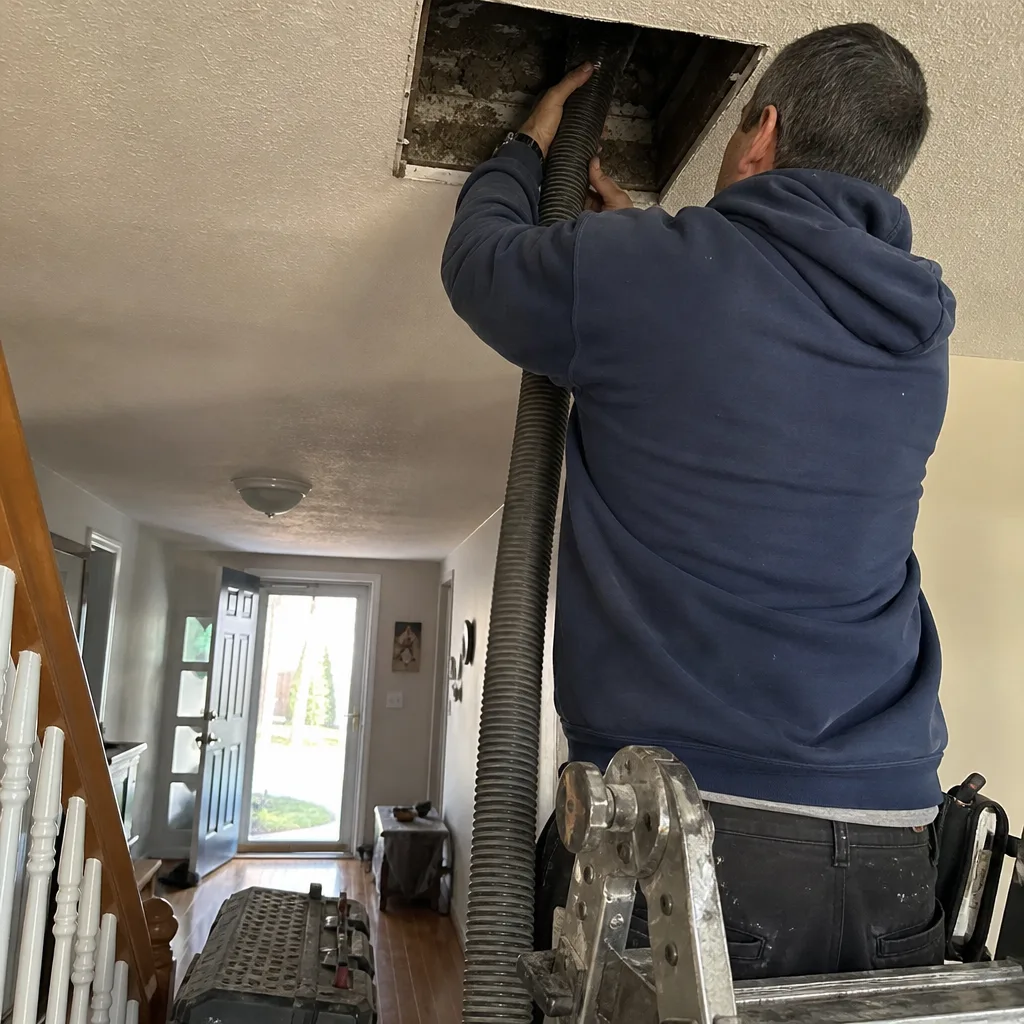 Before
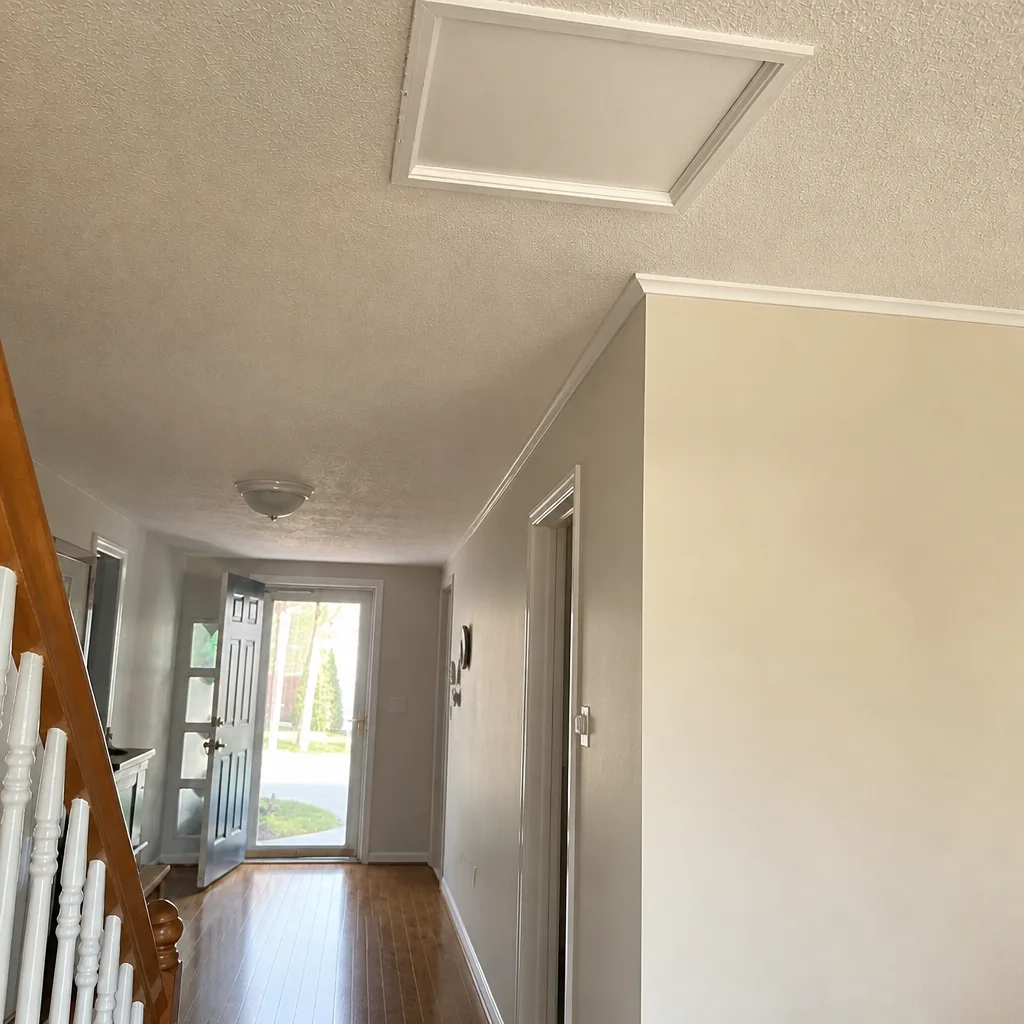 After
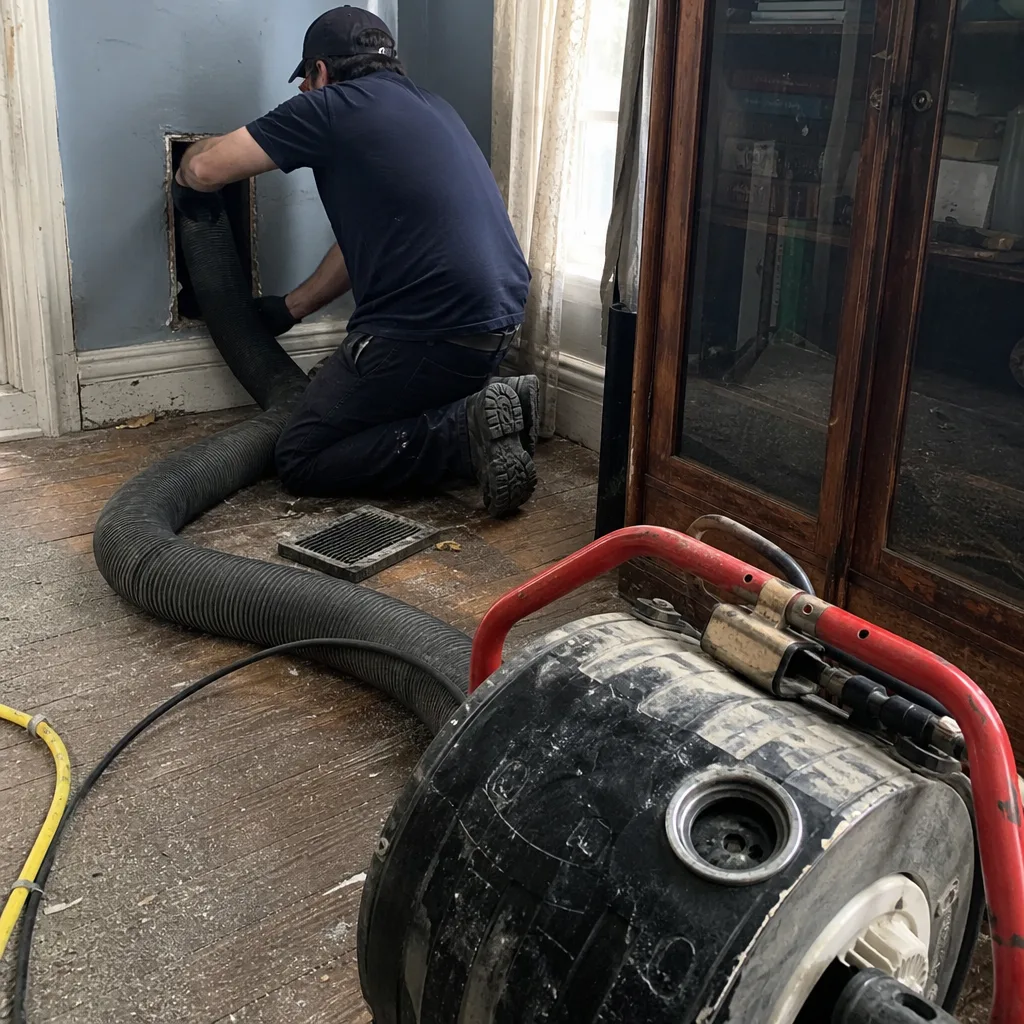 Before
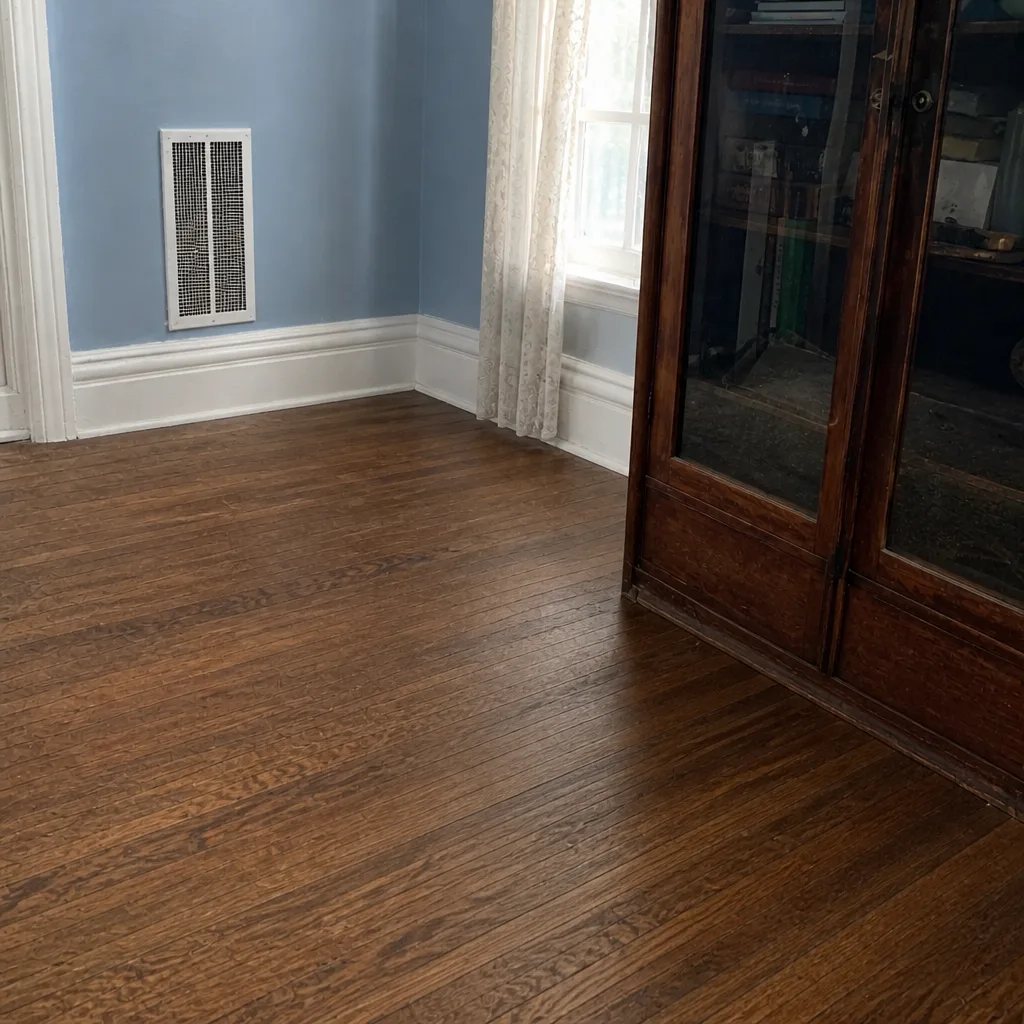 After
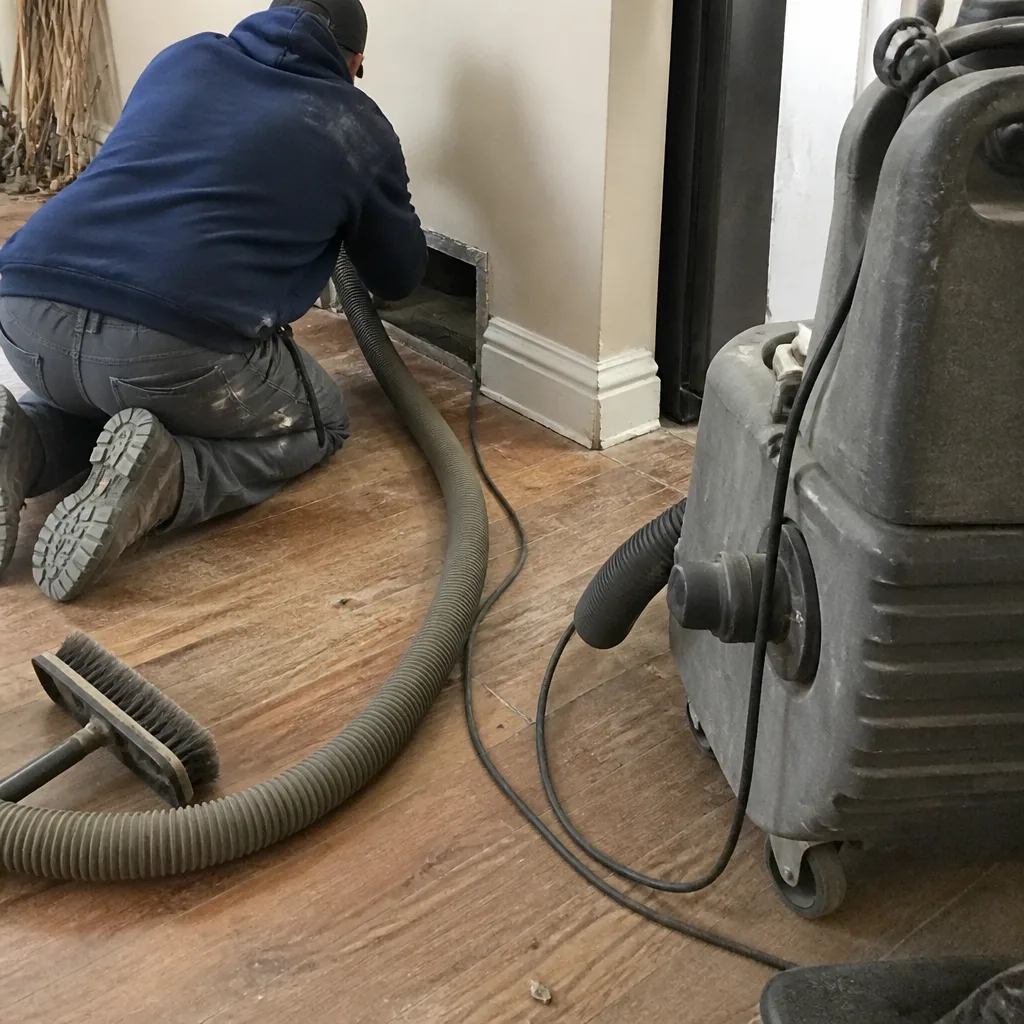 Before
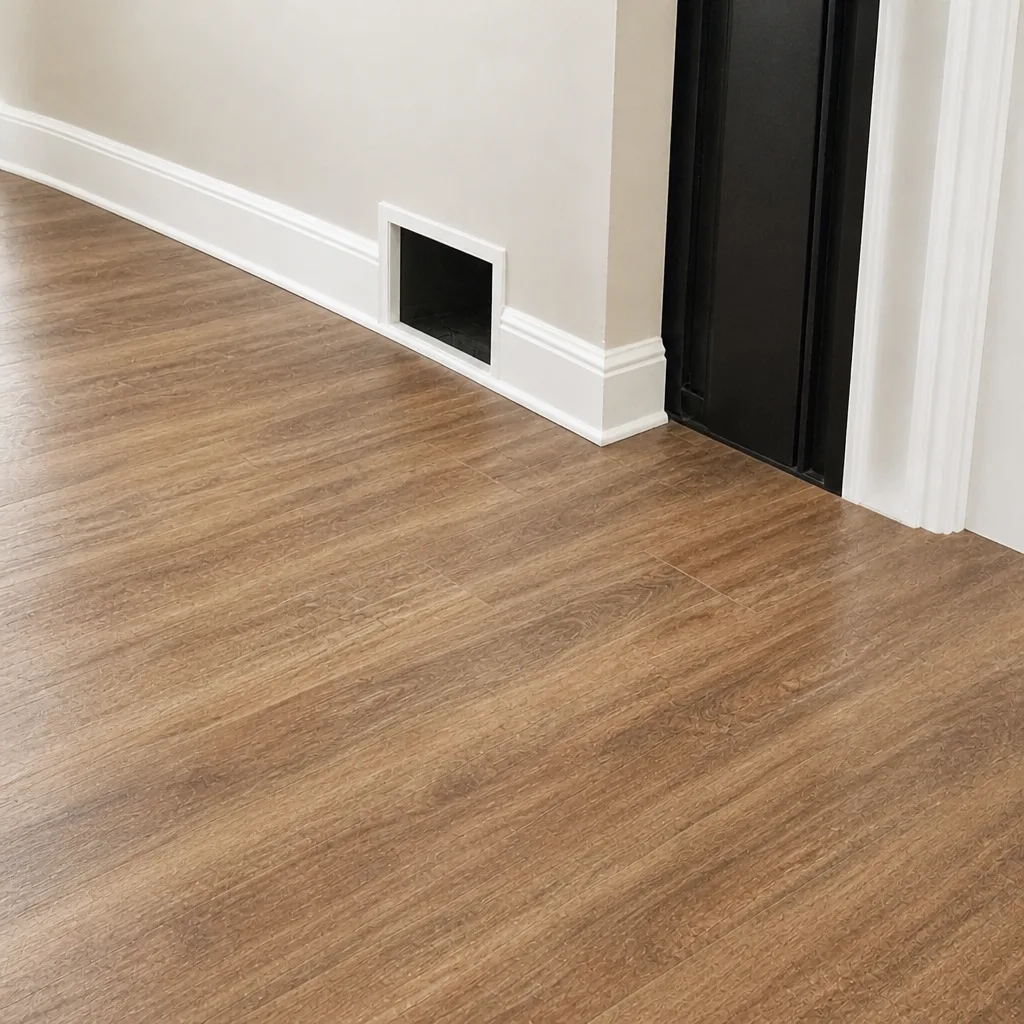 After
When to Call a Professional
A checklist catches most things, but some findings need a technician before anything else gets done. Call a professional if a register blows weak compared to its neighbors, if you see a visibly sagging or kinked flex run in the basement, if a return smells musty while the room doesn’t, if you find standing water in the condensate pan, if your filter is loading up in a fraction of the time it used to, or if your system is older and you’ve never had it inspected. If you’ve renovated and torn out walls or flooring, professional cleaning matters more, not less. If you’ve just bought a Rhawnhurst home and don’t know the duct history, an inspection before any cleaning catches the collapsed-and-leaking conditions up front. Air Duct Cleaning Rhawnhurst offers free estimates in Rhawnhurst – call (888) 301-3197 for one, and bring your log. We answer 24/7. Fast dispatch from 7am to 7pm, Sunday through Friday.
Frequently Asked Questions
Every two to three years is a reasonable default for a Rhawnhurst home with a normally maintained system, and every year if the home has heavy dust sources – recent renovation, pets, or a system with known leaks. The right interval depends on what the inspection finds, which is why the annual inspection matters more than a fixed cleaning schedule.
Not through the collapse. Rotary brush systems and HEPA vacuums work back to the pinch point and stop there. The collapsed length traps debris behind it, and the run has to be repositioned or replaced before cleaning can be completed. That’s why we inspect before we clean – so the repair is planned, not discovered mid-job.
Sustained indoor relative humidity above 60% is the range where mold risk in duct insulation gets serious. In the Philadelphia area, that usually shows up in summer when humid air leaks into a return, or in a humidified house running too much moisture in winter. Keep the main living area between 40% and 55% and the basement below 55%.
Look for evidence, not age. Visible debris at multiple register boots, a filter that loads up faster than it used to, musty smell at returns, weak airflow at one register, or visible dust streaks at the supply grilles after a recent cleaning are all evidence. A duct system that’s twenty years old but clean isn’t a dirty duct system.
Yes – the dryer vent is a separate system and accumulates lint on its own schedule. Dryer vent fires happen when lint builds up and blocks airflow, which raises exhaust temperature. It’s a safety service and should be done at least annually for most households, more often with heavy laundry use.
Start with an inspection, not a cleaning. If the home is in the older Rhawnhurst stock, the duct system has probably seen at least one renovation, and flex duct installed before 2000 is the first thing to have looked at. Once the runs are inspected and any collapse is identified, you can plan the cleaning and repairs from a reliable baseline. Call (888) 301-3197 for a free estimate. We answer 24/7. Fast dispatch from 7am to 7pm, Sunday through Friday.
The Bottom Line
A duct maintenance checklist for a Rhawnhurst home has to be built around the local housing stock, not a generic seasonal reminder. Flex duct collapses at the joints, and collapse stops cleaning equipment cold – so the checklist leads with inspection, not cleaning. Log your filter life, your register findings and your humidity readings. Walk the basement quarterly. Schedule the annual cleaning at the end of heavy-use season, not the start, and have it done with equipment built for the job – rotary brush systems and HEPA vacuum, the tools we run. Bring the log to the estimate. Air Duct Cleaning Rhawnhurst offers free estimates; call (888) 301-3197. We answer 24/7. Fast dispatch from 7am to 7pm, Sunday through Friday.
Written by the team at Air Duct Cleaning Rhawnhurst.