
Last updated November 25, 2026
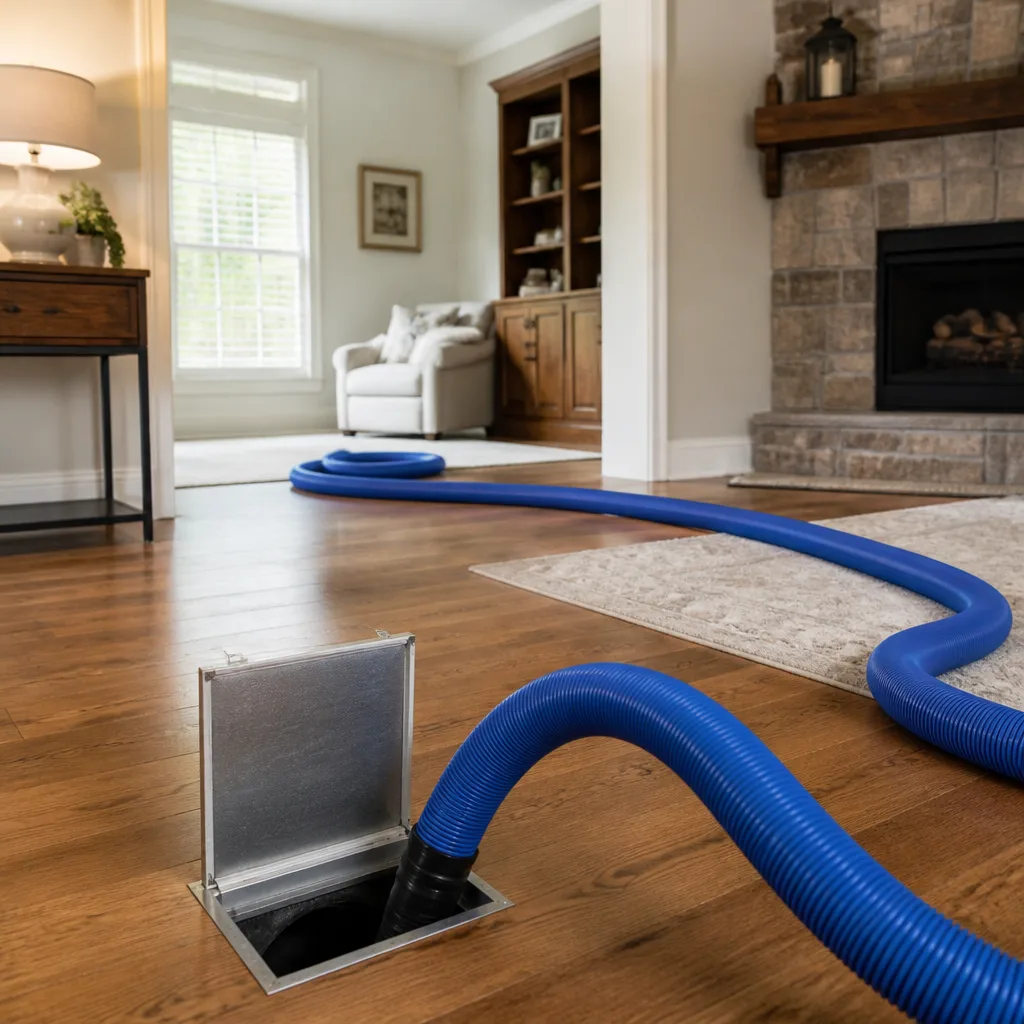 Whole-home duct cleaning
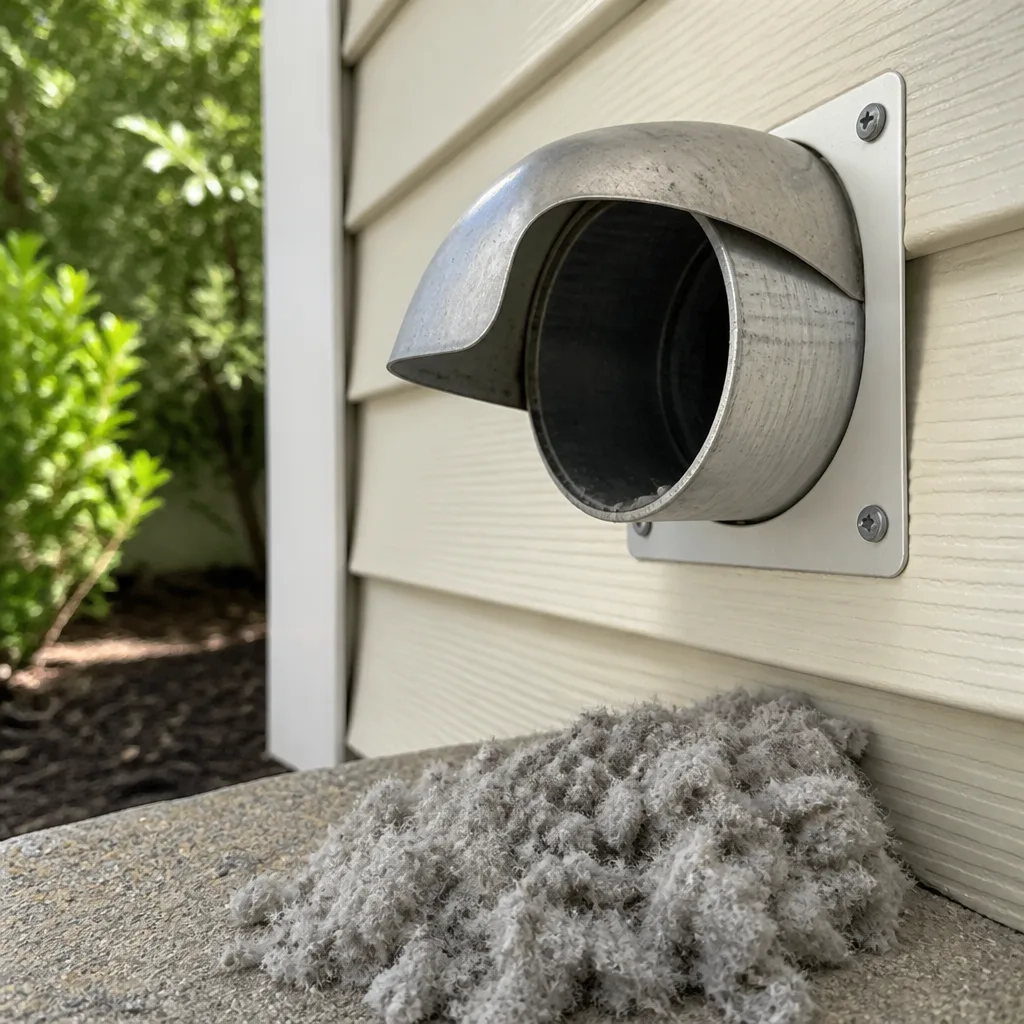 Dryer vent cleaning
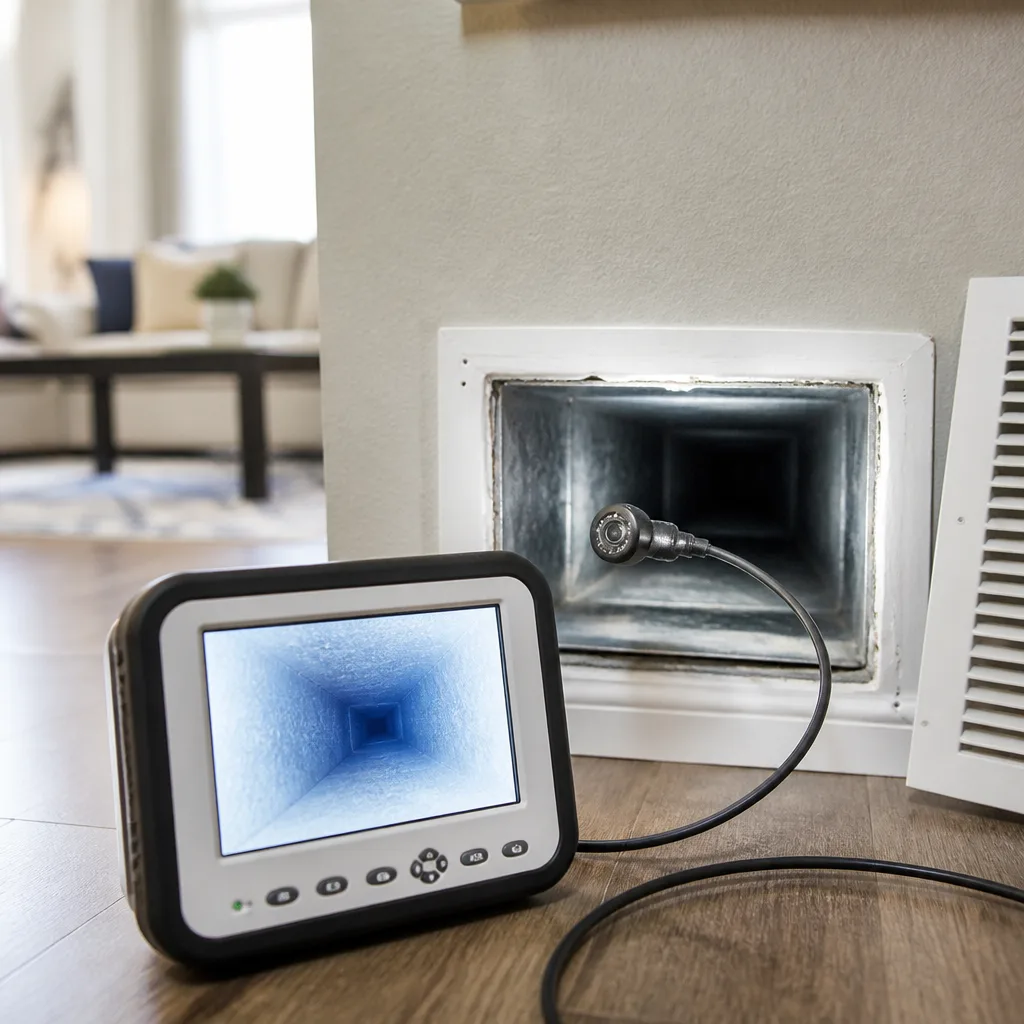 Camera inspection
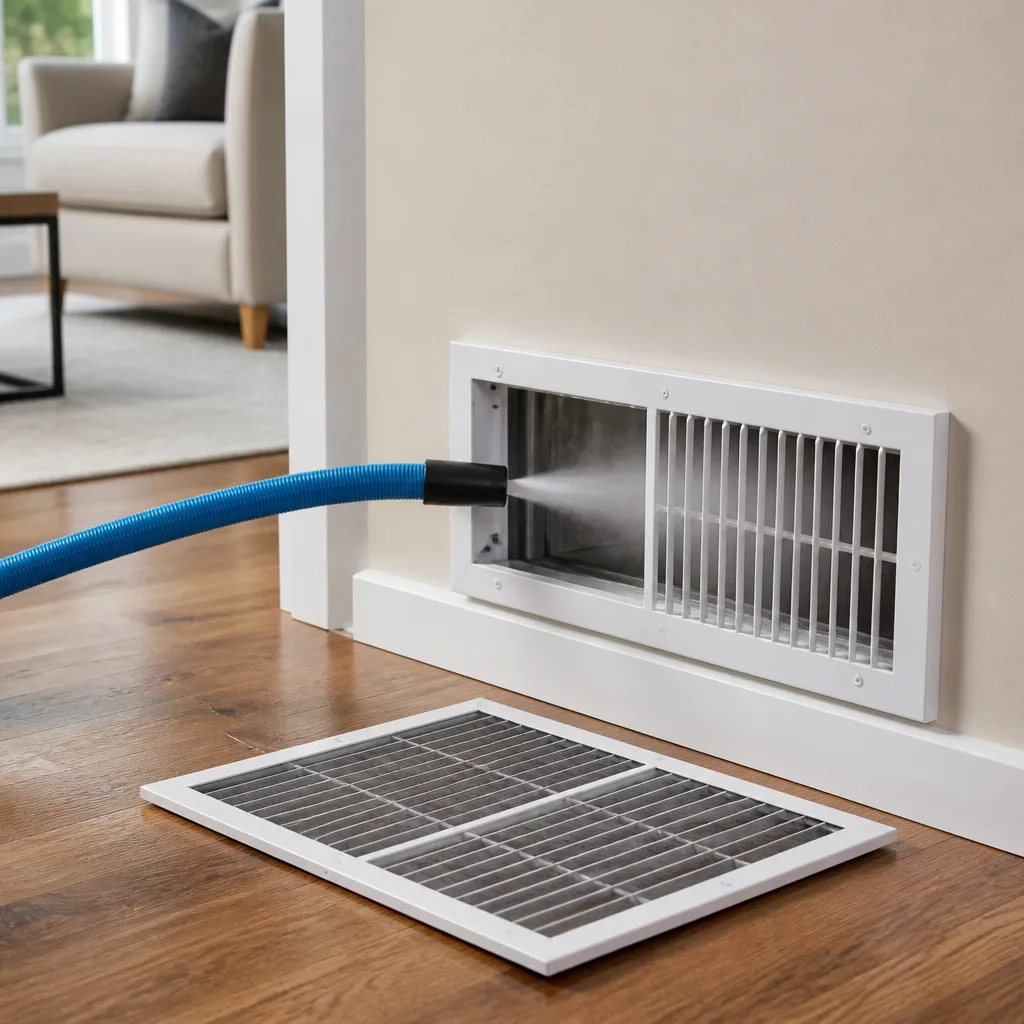 Sanitizing & deodorizing
Whole-system duct and dryer vent check with before-and-after photos - you see exactly what came out of your vents
That "$99 whole-house special" is a bait ad - the real number appears once they are in your hallway, or the "clean" is a shop-vac at the register. We photograph the inside of your ducts before and after instead.
Air Duct Cleaning Cost Breakdown: The Rhawnhurst Homeowner’s Reference for 2026
Two quotes for the same house can legitimately differ by $300. Not because one company is cheating, but because one of them is actually accounting for the time it takes to run a Nikro HEPA vacuum system on a three-story Rhawnhurst rowhouse with 22 vents, and the other one is quoting a number that assumes five minutes of equipment time per room. That gap is the whole story of duct cleaning pricing, and most homeowners never see it because quotes arrive as a single bottom-line figure with no scope attached. This guide breaks the cost apart: what drives it, which line items are real, and which ones are padding. You’ll finish knowing how to read a quote instead of just comparing its total.
Quick Answer
Air duct cleaning in Rhawnhurst typically runs $350 to $700 for a standard whole-home system, and $700 to $1,200 or more for larger homes with multiple zones, heavy contamination, or duct repair built in. The single biggest cost driver is not the number of vents, it’s the scope of work: how many systems, what the ducts are made of, how accessible the runs are, and whether the job includes sealing and sanitizing. A written estimate that lists equipment, vent count, and add-ons is the only number worth comparing.
Styles & brands we work with
- Whole-home duct cleaning
- Dryer vent cleaning
- Camera inspection
- Sanitizing & deodorizing
Table of Contents
- Why two quotes for the same Rhawnhurst house can differ by hundreds
- Per-vent pricing vs. whole-system pricing
- How duct material changes labor time and equipment
- The real cost drivers in a Rhawnhurst job
- Add-ons worth paying for vs. upsells that rarely are
- What rock-bottom quotes can’t cover
- How to build a comparison sheet that normalizes quotes
- Common mistakes to avoid
Why Two Quotes for the Same Rhawnhurst House Can Differ by Hundreds
Rhawnhurst is a neighborhood of mostly mid-century rowhouses and twins, many with finished basements, some with additions off the back, and a large share still running the original trunk-and-branch duct layout from the era the house was built. That layout matters for pricing. A run that drops straight from a main trunk to a first-floor register is quick to clean. A run that snakes through a soffit, around a bathroom chase, and down to a basement register takes longer, needs a different brush head, and sometimes needs a technician to open a section of duct just to reach it.
That’s the first reason two quotes differ. Company A walks the house and counts vents. Company B walks the house and traces the runs. Both give you a number, but only one of them has priced the actual work.
The second reason is equipment time. Contact-based cleaning with a rotary brush system and a HEPA vacuum source isn’t a pass-through job. Each vent gets brushed, the vacuum pulls through the trunk, and the technician verifies what came loose. A 22-vent house with three levels can easily run several hours longer than a 12-vent ranch. If a quote seems to assume otherwise, it’s because the company compressed the time, not because they found a shortcut.
The third reason is what’s included at the end. Some quotes stop at cleaning. Others bundle in sanitizing, coil cleaning, or sealing gaps found during the job. Those are different products with different labor, and the totals reflect it. Neither is automatically right; they just need to be compared on scope, not price.
Per-Vent Pricing vs. Whole-System Pricing
Per-vent pricing sounds fair until you do the math. A company quotes $35 per vent, you count 20 vents, you expect $700. But duct cleaning isn’t 20 separate small jobs, it’s one connected system, and a per-vent number tells you almost nothing about how much time the trunk line, the plenum, or the air handler will take. It also invites a bait-and-switch: low per-vent rates that assume no contamination, then a supplement once the technician is on site and finds the ducts need more than a quick pass.
Whole-system pricing works the other way. The company inspects the system, counts the equipment (air handler, number of zones, number of returns), estimates the actual cleaning time, and quotes one flat price for the whole job. That’s the model we use because it matches how the work happens.
For most Rhawnhurst homes, whole-system pricing is the more accurate approach for three reasons:
- Rowhouses share a lot of ductwork. A 1,400-square-foot rowhouse can have as much trunk footage as a larger suburban home because the layout is long and narrow, and per-vent pricing misses the trunk entirely.
- Basements and additions change the count. Finished basements and back additions add returns and supply runs that per-vent math often undervalues.
- Contamination varies widely. Post-renovation dust, pet dander, and years of filter neglect all affect cleaning time, and a flat per-vent number can’t account for that.
If a company insists on per-vent pricing, ask what happens when the trunk line turns out to be the dirtiest part of the system. The answer tells you whether the price is real.
How Duct Material Changes Labor Time and Equipment
The ducts in Rhawnhurst homes fall into three broad categories, and each one changes the cleaning approach, the equipment selection, and the labor time. This is one of the most overlooked parts of a quote, and it’s worth asking about directly.
- Sheet metal. The most common material in mid-century homes. Durable, cleanable with a rotary brush, and forgiving of the pressure a professional vacuum system applies. Usually the fastest to clean.
- Flexible duct. Corrugated and often used on additions, basement runs, and retrofit work. The ridges trap debris that a straight brush can miss, so technicians use a softer brush and slower feed rate to avoid tearing the liner. Slower work, sometimes more time.
- Fiberboard or duct board. Common in some systems as trunk material. It has an exposed fibrous interior that requires gentler handling, and if the board is damaged or deteriorating, cleaning alone won’t fix it, sealing or replacement comes into play.
That’s why the equipment matters. An air duct cleaning job on a flex-heavy system with a long trunk line is a different task than cleaning a simple sheet metal system, and rotary brush systems with adjustable heads and paired HEPA vacuum units are what let a technician match the tool to the material. Companies using a shop vac and a hand brush physically can’t do the same job, because the vacuum source isn’t strong enough to pull dislodged debris back to the collection point, and the brush heads aren’t designed for the duct material.
When you compare quotes, ask what the technician will use on each section of duct. If the answer is vague, the pricing probably is too.
The Real Cost Drivers in a Rhawnhurst Job
Cost in this trade isn’t arbitrary. It follows a short list of concrete inputs, and once you know them, you can sanity-check any quote you receive.
- Number of systems. A single air handler is priced as one job. A home with a second system for an addition, a basement zone, or a mini-split is priced as two jobs, because the equipment gets moved and the process restarts.
- Vent and return count. Not a per-vent rate, but a driver. Twenty-two vents take longer than fourteen, and returns often get skipped in cheap quotes.
- Accessibility. Ducts behind finished ceilings, under subfloor, or in tight chases take longer to reach, and in some cases a small access panel has to be cut and patched.
- Condition. Heavy contamination from renovation dust, pest activity, or a long-neglected filter means multiple passes and additional time.
- Equipment mobilization. Hauling a Nikro HEPA vacuum, a rotary brush system, and air filtration equipment into a Rhawnhurst rowhouse, setting up containment, and pulling it all back out is real labor that a $99 coupon can’t cover.
- Add-ons. Dryer vent cleaning, coil cleaning, sanitizing, and duct sealing each add time and materials.
A technician with up to 13 years of experience will usually be able to estimate most of this during a walkthrough, and the best sign of a serious quote is that it reflects these inputs line by line rather than arriving as one lump sum.
Add-Ons Worth Paying For vs. Upsells That Rarely Are
Most duct cleaning quotes arrive with a menu of extras attached. Some of those extras are genuinely worth the money. Others exist because the margin is good and the homeowner can’t verify the result.
Add-ons that justify their cost
- Dryer vent cleaning. Offered as a standalone dryer vent cleaning service because lint buildup in a dryer vent is a fire hazard, and the risk runs higher on rowhouses where the vent run is long and shares a wall with neighbors. Worth doing, usually priced separately, and worth doing even if the ducts themselves are clean.
- Coil cleaning. The evaporator coil sits wet most of the year. When dust combines with moisture it forms a mat that cuts airflow and drives up energy use. Cleaning the coil alongside HVAC cleaning is genuinely useful on a system overdue for service.
- Duct sealing. Gaps at joints, particularly in basements and additions, leak conditioned air. Sealing what’s found during cleaning improves the system, and having the same company repair it removes a second visit from a second contractor.
- Filter upgrades. After we’ve seen the inside of your system, recommending a filter that actually fits your ductwork and air handler is a small cost with real benefit. Honeywell and Aprilaire products fit specific cabinet and return sizes, and choosing the right one depends on what we observed, not what a catalog says.
Add-ons that rarely earn their price
- Fogger treatments. A fogger sprays a mist through the ducts. It deposits a scent and a light antimicrobial coating on surfaces, but it doesn’t remove the contamination underneath, and once the fog settles, the debris that caused the problem is still there. Real sanitizing happens after cleaning, not instead of it.
- Ozone generators. These are sold as air quality treatments but do nothing to the duct surfaces. Skip them.
- “Antimicrobial coatings” without cleaning first. Coating an unclean duct seals debris in place. If a company recommends it before the ducts are cleaned, the sequence is backwards.
If the add-on list on a quote is longer than the cleaning line, ask which ones the technician will actually verify during the job. That question tends to sort the list.
What Rock-Bottom Quotes Can’t Cover
A $99 whole-house duct cleaning quote is not a discount. It’s a different product with the same name.
Here’s the math from the inside. A professional duct cleaning job on a Rhawnhurst rowhouse requires a truck, at least two technicians, several hours of labor, and equipment that costs more than most cars. The Nikro HEPA vacuum and the Rotobrush rotary brush system are the working tools for contact-based cleaning, and they require maintenance, filter replacements, and consumables. Abatement Technologies air filtration units used during the job add setup time and again need servicing. None of that fits inside a $99 headline price.
So the rock-bottom quote has to be recut somewhere. The usual cuts:
- One technician, one pass. No second technician to verify, no second pass on the trunk, and no time budget for anything but the vents closest to the access point.
- Shop-vac vacuum source. Not strong enough to pull dislodged debris back to the collection point from the far end of a 20-foot run. What comes loose stays in the duct or deposits in a room.
- No trunk or plenum cleaning. The most heavily contaminated section is skipped because it’s the slowest to clean.
- Upsell pressure on site. The low quote becomes a supplement once the technician is in the door, and now you’re paying more than the fair quotes you turned down.
- No proof. No before-and-after photos, no way to verify what “cleaning” actually happened.
A fair quote for a Rhawnhurst home reflects the actual equipment and labor the job needs. If the price is too low to cover that, the price is not the deal.
How to Build a Comparison Sheet That Normalizes Quotes
Comparing totals is a losing exercise. Comparing scope is what actually protects you. Build a one-page sheet, write each company’s name across the top, and fill in the same line items for each one. The gaps in the comparison are usually the answer.
- Systems and zones cleaned. One air handler or two? Is the basement included?
- Vent and return count. Vents only, or vents plus returns? The returns are often where the most debris accumulates.
- Trunk and plenum included? Yes or no. A quote that skips the trunk is a partial job.
- Equipment named. Which vacuum and which brush system? If the quote doesn’t say, the answer is probably not what you’d hope.
- Containment during work. Is air filtration equipment used to capture dislodged debris, or are dust sheets the only protection?
- Before-and-after photos. Included in writing? This is the single best way to confirm the work happened.
- Add-ons itemized. Which extras are priced, which are optional, and which are “recommended after inspection” with no number attached?
- Price structure. Flat per-system price, or per-vent? If per-vent, what happens when the job runs long?
- Written estimate signed before work starts. No verbal-only pricing.
- Payment terms and scheduling. No surprises on either side.
Ten lines, ten questions. Once they’re filled in, the “cheapest” quote is usually the one with the most blank spaces, and the right quote becomes obvious.
Common Mistakes to Avoid
- Comparing totals without comparing scope. Two quotes $300 apart on the same house are almost always two different jobs. Ask what’s included before you decide one is a better deal.
- Accepting per-vent pricing without a cap. A per-vent number with no ceiling can balloon once the technician is on site and “finds more.” A flat price per system protects you.
- Skipping the trunk and plenum. Rhawnhurst rowhouses have long trunk runs, and that’s the dirtiest part of the system. Any quote that cleans only the vents isn’t a full job.
- Paying for a fogger instead of sanitizing after cleaning. A fogger adds scent. It doesn’t remove the debris. Cleaning first, then sanitizing, is the order that actually works.
- Ignoring the dryer vent because you’re only booking duct cleaning. The dryer vent is a separate fire-safety concern, and on older Rhawnhurst homes with long vent runs, it’s worth adding to the same visit.
- Booking a company without checking equipment. Ask what they use. If the answer is a shop vac, the price reflects it.
- Not asking for before-and-after photos. This is how you know the work happened. Any reputable company will provide them without being asked twice.
See the difference
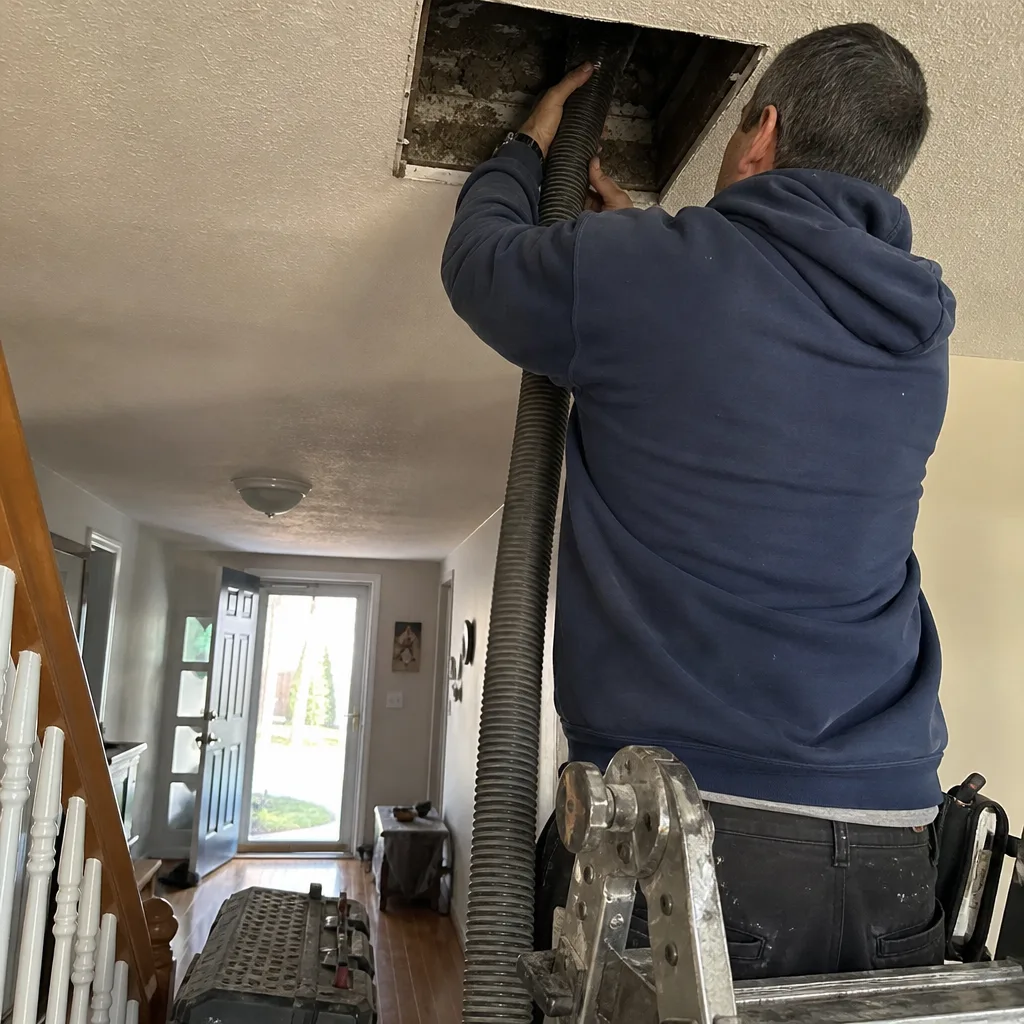 Before
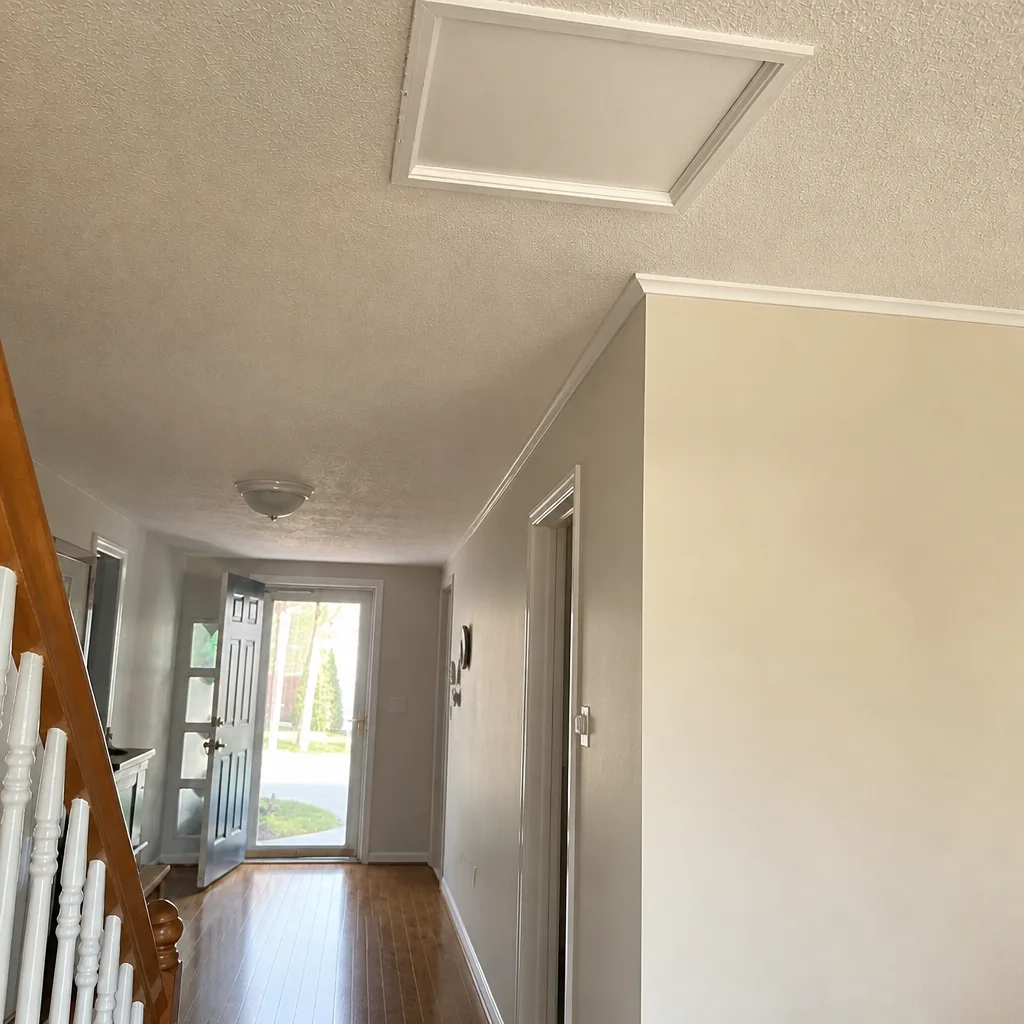 After
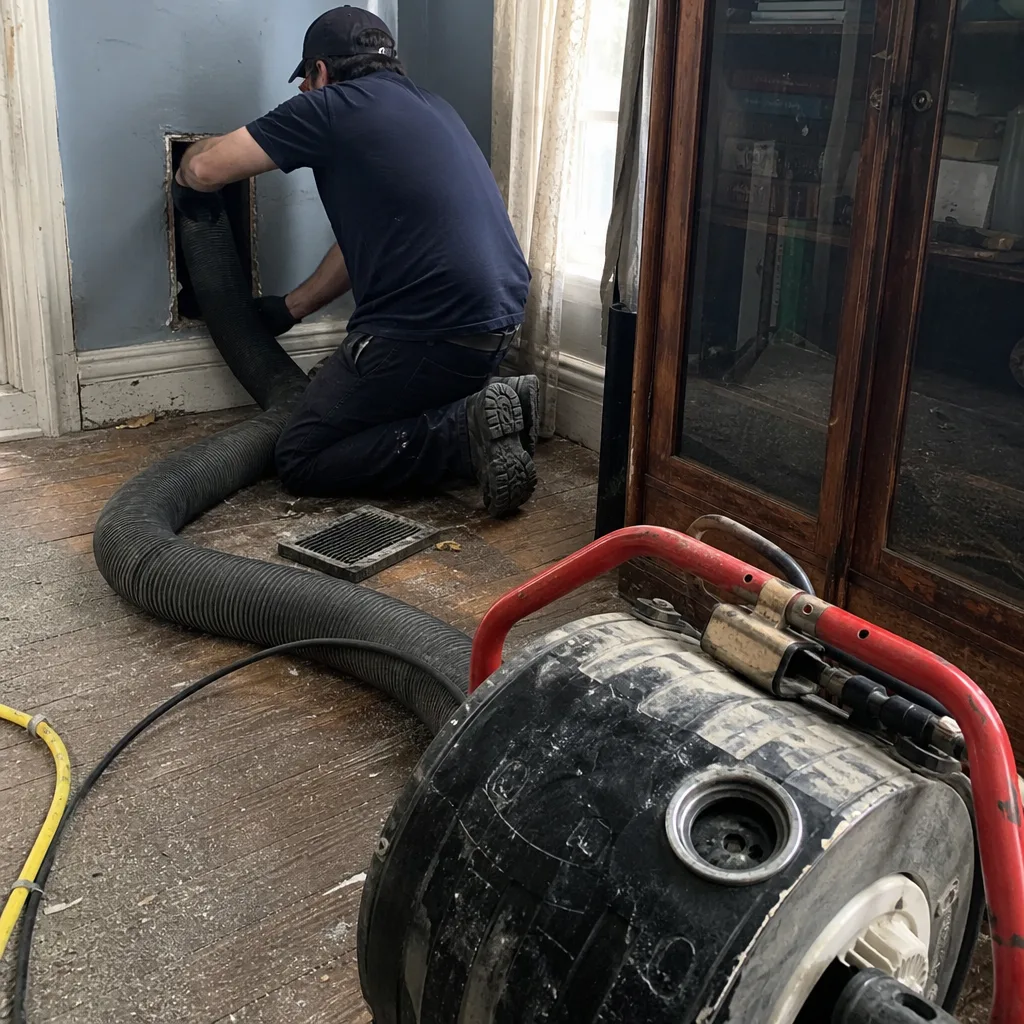 Before
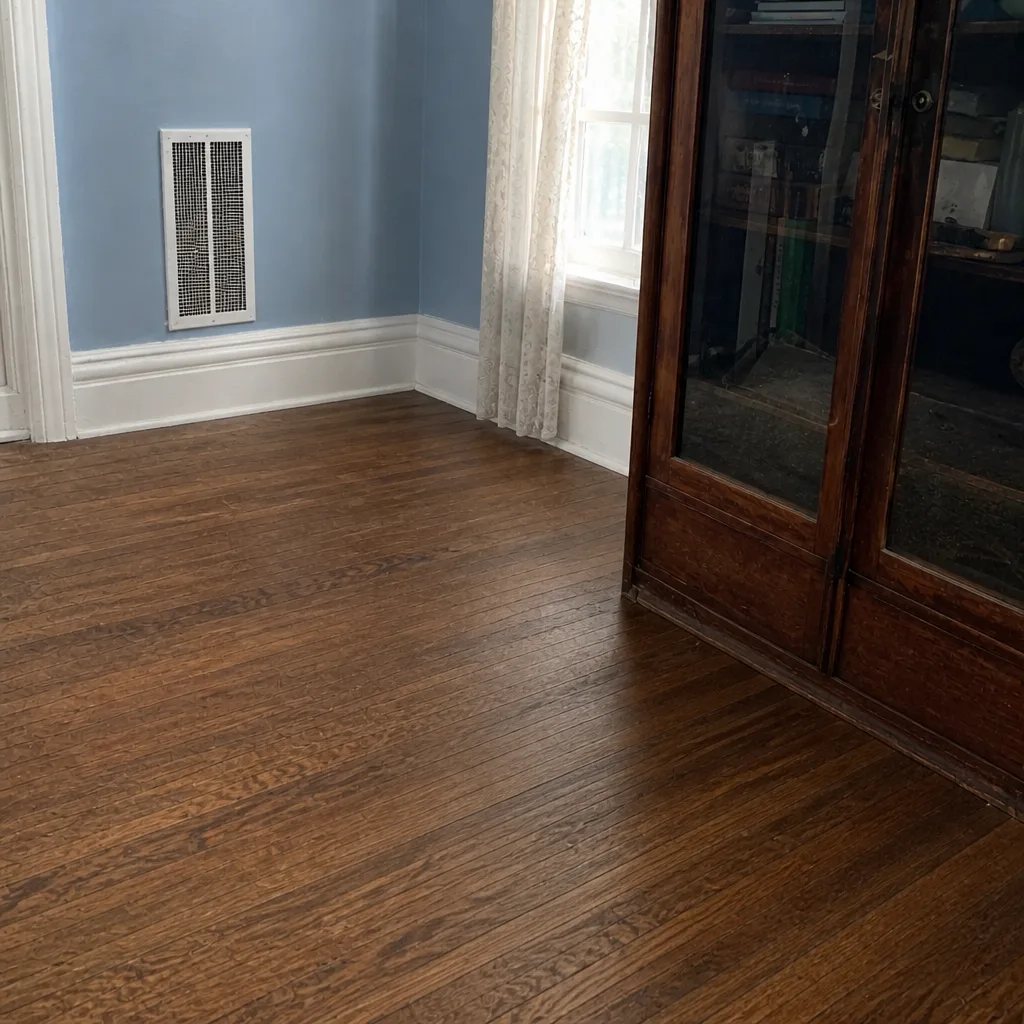 After
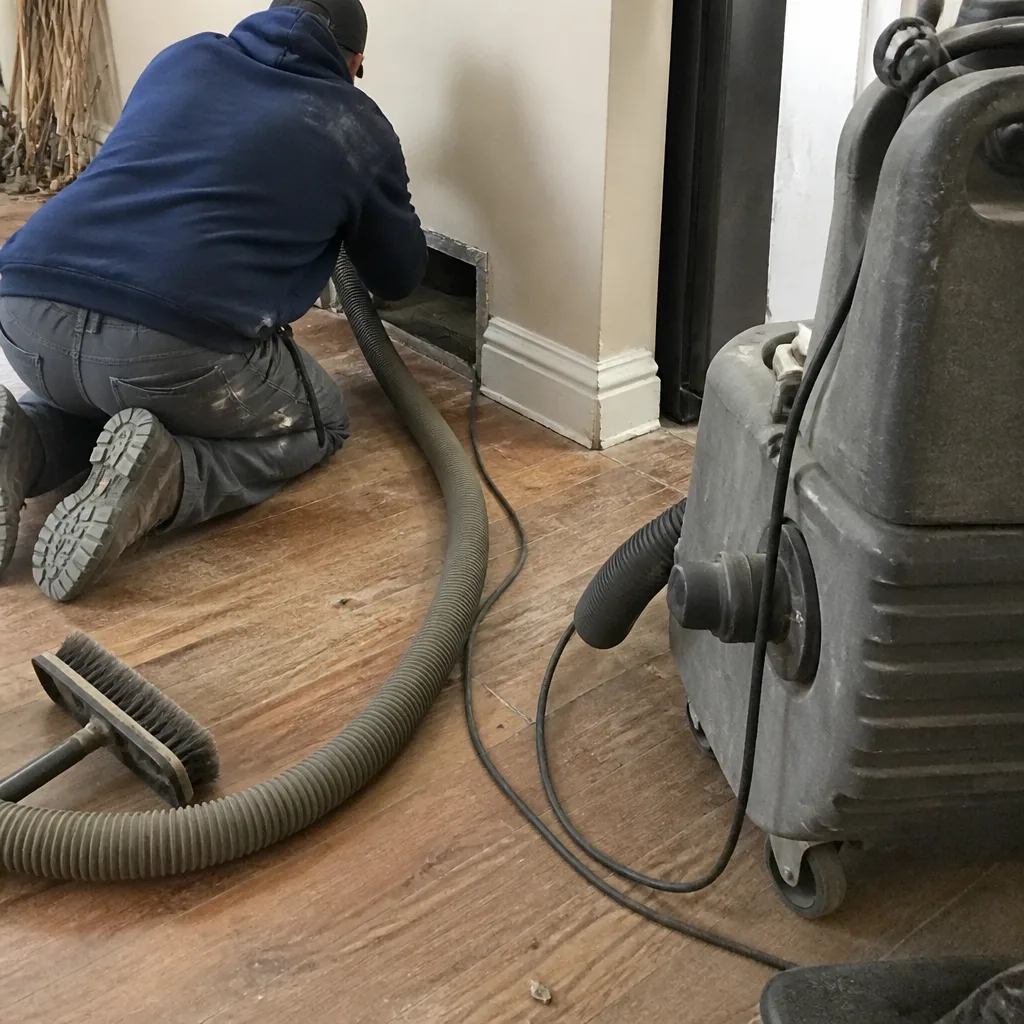 Before
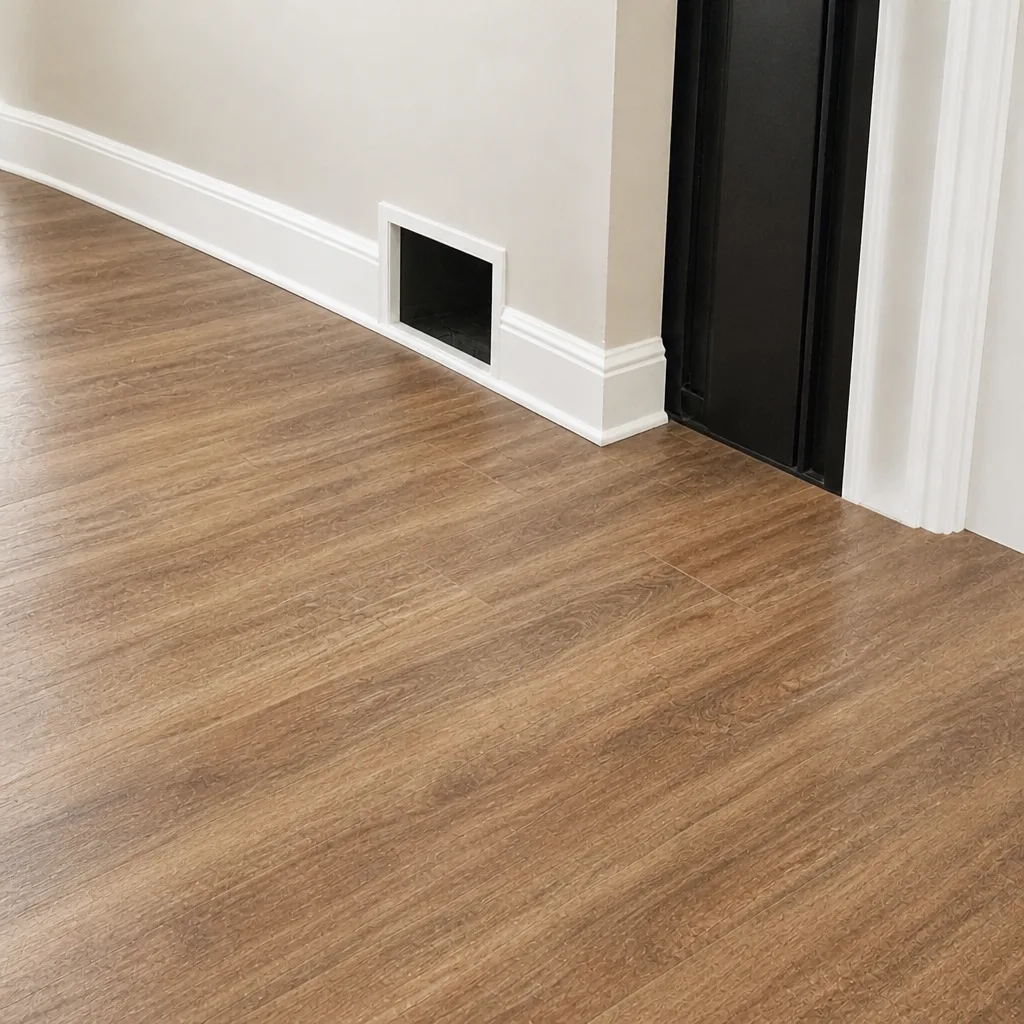 After
When to Call a Professional
Some duct issues are obvious. Visible dust blowing from a register after the heat kicks on, a musty smell that doesn’t clear, a system that’s never been cleaned since the house changed hands, or post-renovation dust that keeps settling on furniture are all signals worth a look. Same goes for a dryer that takes over an hour to dry a load, or a vent hood that no longer clears moisture from the bathroom.
Other cases are less visible. A system that’s been running with a neglected filter, a basement that smells damp, or an HVAC unit that’s short-cycling may point to duct contamination or leaks that only an inspection can confirm. Our technicians have up to 13 years of experience walking through these systems, and we can tell you during a free estimate whether the work is actually needed, plus we handle duct repair and sealing on the same visit if the inspection turns up gaps. Air Duct Cleaning Rhawnhurst offers free estimates in Rhawnhurst. Call (888) 301-3197. We answer 24/7. Fast dispatch from 7am to 7pm, Sunday through Friday.
Frequently Asked Questions
For most Rhawnhurst homes, a full-system clean runs $350 to $700, and larger homes with multiple zones or heavier contamination run $700 to $1,200 or more. The written estimate sets the final price, and the estimate is free. Call (888) 301-3197 for an exact quote.
Cheap quotes typically skip the trunk and plenum, use a single technician and a shop-vac vacuum source, and rely on a supplement or upsell once the technician is in the door. The low headline price is real; the job it covers generally isn’t. Call (888) 301-3197 for a quote that lists what’s included before you book.
Before-and-after photos of your own ducts, taken during the job, are the simplest verification. Ask for them in writing with the quote. Our technicians capture them at the vent level so you can see what changed. Call (888) 301-3197 for an appointment.
Every three to five years is a reasonable baseline for most homes, and sooner after renovation, a move-in, pest activity, or long filter neglect. The right interval depends on the system, not a rigid rule. Call (888) 301-3197 and an estimate will tell you where things stand now.
Usually not as a substitute for cleaning. A fogger adds scent and a light surface treatment, but the debris underneath stays put. Sanitizing after a proper clean is the version that does something. Call (888) 301-3197 to talk through the right sequence for your system.
Dryer vent cleaning is priced as its own service because it’s a separate safety concern and a different vent run. Bundling it with duct cleaning on the same visit usually reflects shared mobilization time. Call (888) 301-3197 for a combined estimate.
The Bottom Line
Duct cleaning pricing looks opaque until you break it into its actual parts: systems, vents, duct material, accessibility, condition, and add-ons. Per-vent pricing misses most of that; a whole-system written estimate captures it. Add-ons like dryer vent cleaning, coil cleaning, and duct sealing are usually worth the money. Fogger treatments, ozone, and coatings applied before cleaning rarely are. The cheapest quote is usually the one with the most blanks in a scope comparison, and the right quote is the one that lists equipment, verifies results with before-and-after photos, and locks in one flat price per system before work starts. That’s the standard we hold ourselves to in Rhawnhurst, and it’s the standard any homeowner should hold a duct cleaning company to.
Call (888) 301-3197 for a free estimate on air duct cleaning, dryer vent cleaning, HVAC cleaning, or duct repair and sealing in Rhawnhurst. We answer 24/7. Fast dispatch from 7am to 7pm, Sunday through Friday. The local pro we connect you with is licensed and insured as their state requires, and the written estimate sets the final price before work starts.
Written by the team at Air Duct Cleaning Rhawnhurst.