
Last updated November 25, 2026
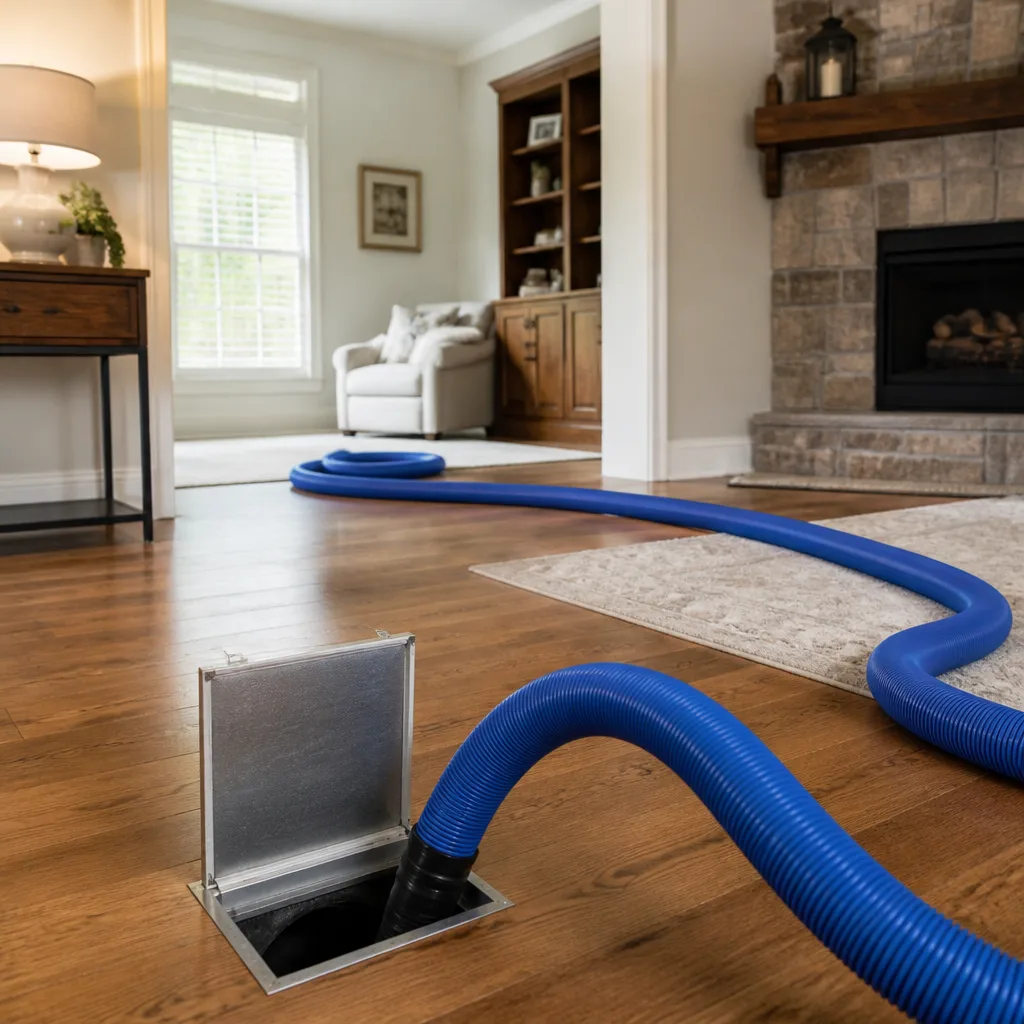 Whole-home duct cleaning
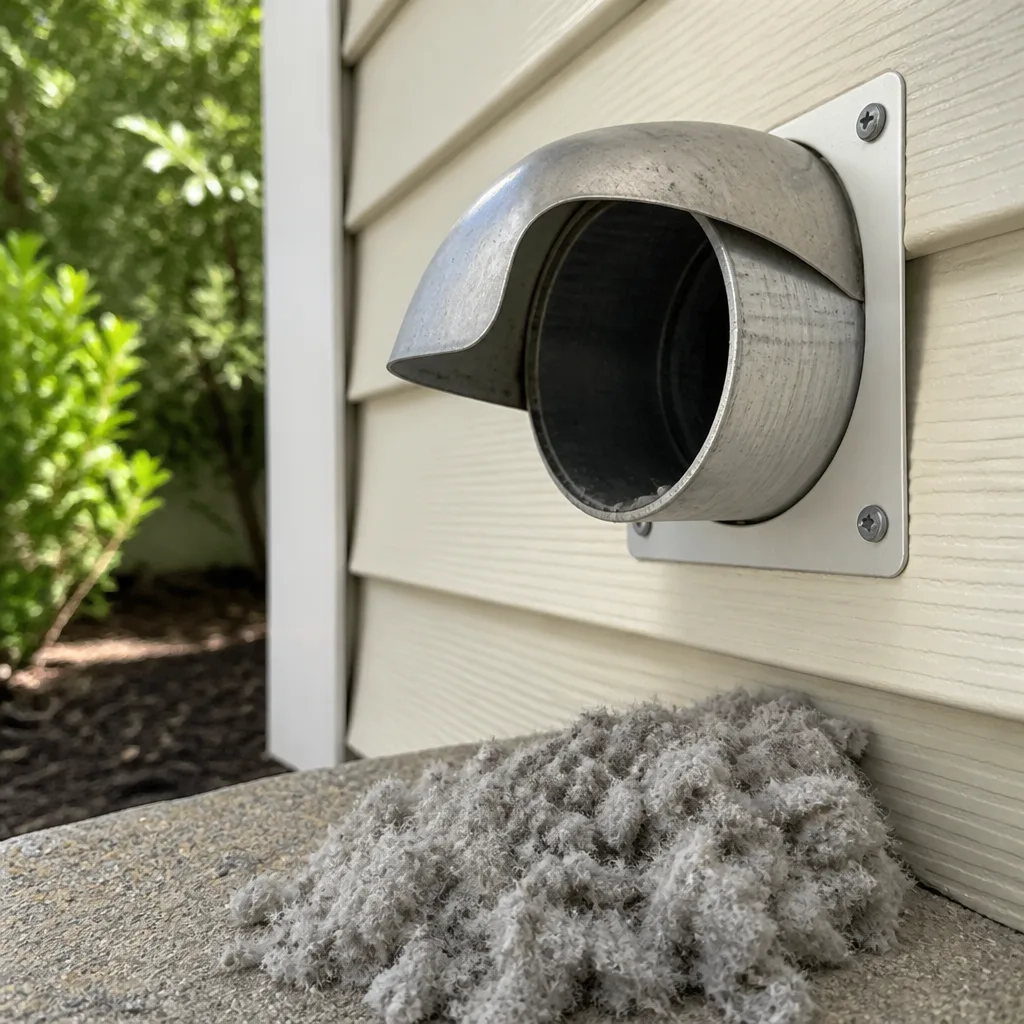 Dryer vent cleaning
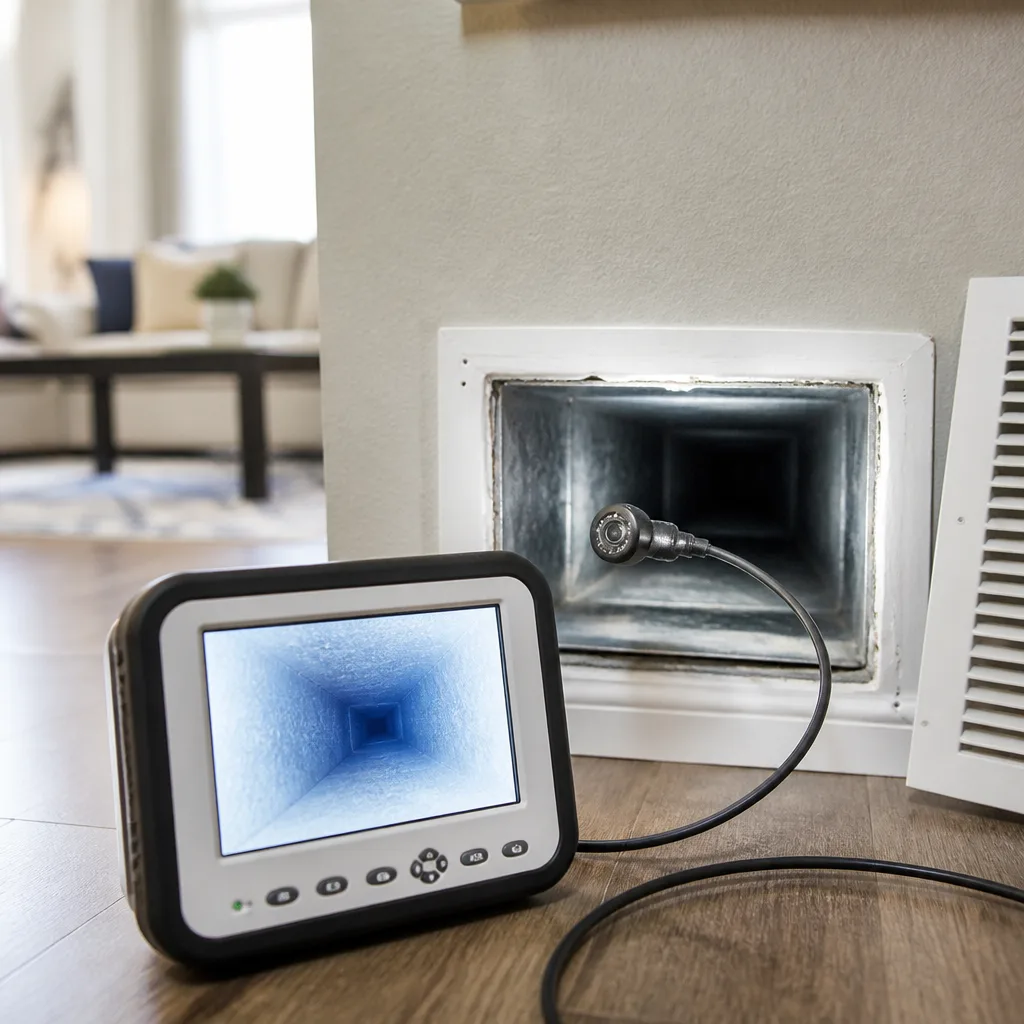 Camera inspection
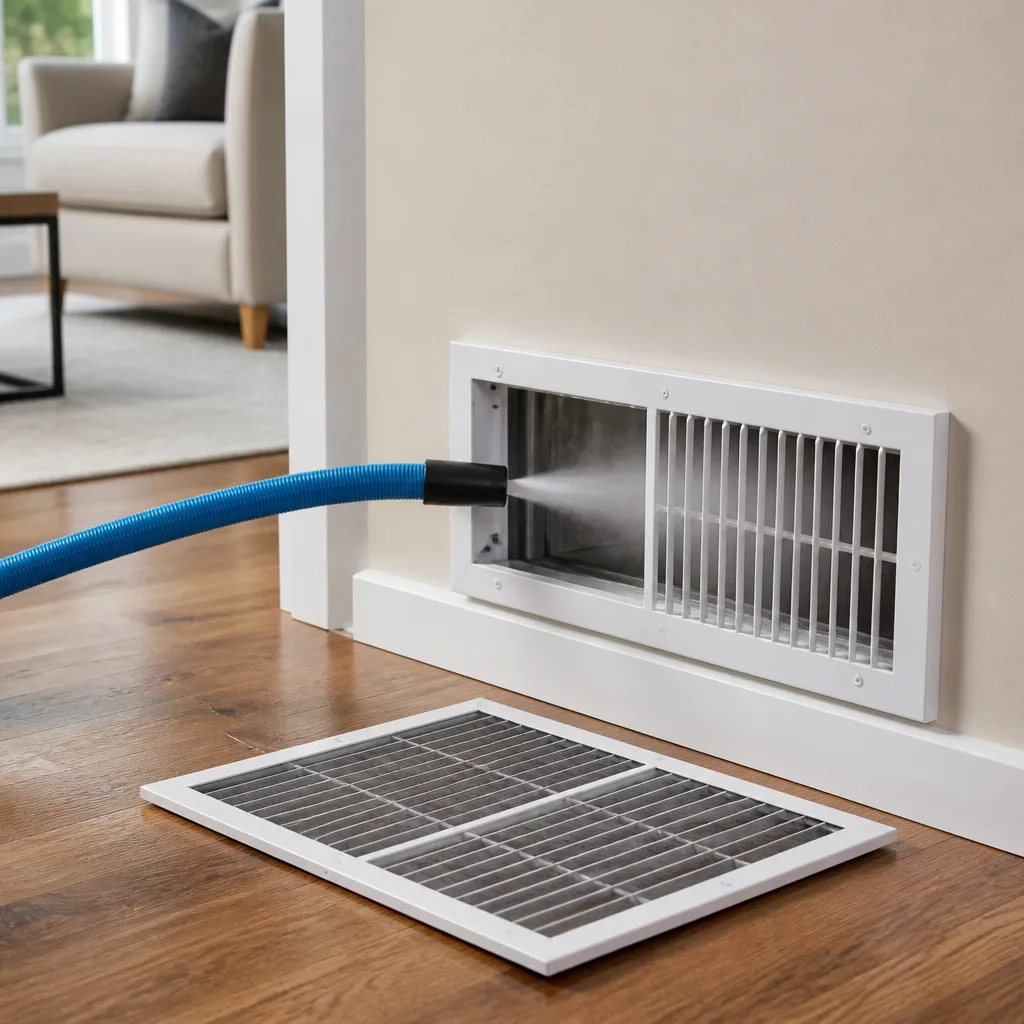 Sanitizing & deodorizing
Whole-system duct and dryer vent check with before-and-after photos - you see exactly what came out of your vents
That "$99 whole-house special" is a bait ad - the real number appears once they are in your hallway, or the "clean" is a shop-vac at the register. We photograph the inside of your ducts before and after instead.
How to Hire an Air Duct Cleaning Contractor in Rhawnhurst: A Step-by-Step Guide
That $49 whole-house duct cleaning coupon isn’t a deal. It’s a door-opener. The Federal Trade Commission has documented this exact scheme in the air duct cleaning industry, and it keeps working because most homeowners don’t know what to ask before the truck pulls into the driveway. The low price gets a technician inside, and the invoice that follows is built on add-ons, “sanitizing treatments,” and repairs nobody inspected beforehand. This guide gives Rhawnhurst homeowners a concrete vetting framework based on three things that actually predict the outcome: the equipment on the truck, the process the company is willing to disclose, and a written scope of work that removes all ambiguity about what you’re buying.
Quick Answer
To hire an air duct cleaning contractor in Rhawnhurst, ask five process questions before booking, demand equipment specifics (make, model, and whether the vacuum is HEPA-rated with enough airflow to put the duct system under negative pressure), confirm the company does true source removal rather than surface-only wiping, and get a written scope of work that lists exactly what’s included. Price should be per system, not per vent, and a legitimate contractor will perform a pre-inspection before quoting. Reviews and a NADCA listing are a starting floor, not proof of a good job.
Styles & brands we work with
- Whole-home duct cleaning
- Dryer vent cleaning
- Camera inspection
- Sanitizing & deodorizing
Table of Contents
- Why duct cleaning attracts bait-and-switch pricing
- The five process questions to ask before you book
- How to request equipment documentation (and what a good answer looks like)
- Why NADCA membership is a floor, not a ceiling
- Red flags in quotes: per-vent pricing and no pre-inspection
- How to write a scope of work for your Rhawnhurst home
- What a legitimate duct cleaning job actually looks like
- Rhawnhurst-specific factors that affect duct cleaning
Why duct cleaning attracts bait-and-switch pricing
Duct cleaning sits in an unusual spot in the home services market. Almost every homeowner has ducts, most have never seen inside them, and nobody has a reliable way to judge the result from the outside. That combination of universal need plus invisible outcome is exactly what a bad operator looks for. You can’t taste the difference between a cleaned duct and a wiped register cover, so the work sold and the work performed can drift far apart without the customer knowing.
The Federal Trade Commission has flagged this specific problem in the duct cleaning industry, warning consumers about low-price come-ons that escalate on site. The pattern is consistent: a very low advertised price, a technician who arrives and finds “problems,” and a final invoice several times the coupon. Sometimes the “problem” is mold that turns out to be dust. Sometimes it’s a broken component the homeowner never got a chance to see before the technician “found” it.
We’re not telling Rhawnhurst homeowners to distrust every company with a coupon. We’re telling you that price alone can’t tell you which one you’re dealing with, because the low price and the honest price can look identical on a flyer. What separates them is the process. A company doing real work will happily tell you how it does it, what equipment it uses, and what it will and won’t include for a given price. A company that won’t tell you those things before booking is telling you something too.
The other reason this industry attracts bad actors is that there’s no single licensing body for duct cleaning the way there is for electrical or plumbing work. Some municipalities have general contractor requirements, but the trade itself is largely self-regulated. That puts more responsibility on the homeowner to vet than it would for a job with a clear legal gate.
When a duct cleaning company contacts you and asks nothing about your home before quoting, that’s already a signal. A legitimate contractor wants to know the size of the system, the number of returns, the age and condition of the equipment, and whether there’s been recent renovation. Without those, any quote is a guess dressed up as a price.
The five process questions to ask before you book
These five questions reveal within two minutes whether a company is doing true source removal or surface-only cleaning. Ask them on the phone. A company that has done this work seriously will answer each without hesitation. One that stumbles, deflects, or says “our guys handle all that” is telling you something.
- Do you put the duct system under negative pressure while cleaning? This is the single most important question in duct cleaning. The answer should describe a HEPA vacuum connected to the main trunk or a supply register, so that dislodged dust is pulled out of the system rather than pushed into the living space. A company that can’t describe how it does this isn’t doing source removal; it’s agitating dust it can’t contain.
- Are you cleaning every connected component, or just the accessible duct runs? Air ducts connect to the air handler, the plenum, the coil, and often a humidifier or bypass. Cleaning the visible branch ducts and leaving the coil and plenum untouched means the majority of the contamination stays. A good answer names the components included in the price.
- What’s your method for the duct interior: contact brushing, air whip, or hand-wiping? Contact-based cleaning (rotary brush systems) physically dislodges contaminants stuck to the duct walls. Air-only cleaning can move loose debris but often misses the film that adheres to the sheet metal. A good answer describes the tool and where it’s used.
- Will you perform a pre-inspection before quoting? Pre-inspection is where an honest contractor finds the actual condition of the system, notes any damage, and prices the job based on what’s there. A company that quotes a firm whole-house price without seeing anything is either overpricing the average or planning to upsell you when it arrives.
- What’s on the written scope, and what costs extra? The answer here tells you whether the quote is real. If the base price doesn’t include sanitizing, repair of gaps found, or sealing, those should be listed as options with prices. If a company can’t produce a written scope before the work begins, the price is negotiable after the fact.
Ask one more if you can: whether the technician documents the work with photographs. Companies that photograph before and after have a real record to stand behind.
How to request equipment documentation (and what a good answer looks like)
Ask any duct cleaning company you’re considering what make and model of vacuum it uses in the home, and whether the unit is HEPA-rated. This is a reasonable request and a legitimate company will answer without defensiveness. The equipment question matters because duct cleaning quality is largely determined by the vacuum, not the brush.
What a good answer sounds like:
- A named manufacturer. Companies serious about the work use recognized industry equipment brands. Rotobrush rotary brush systems are the standard for contact-based duct cleaning because they combine a rotating brush with a powerful vacuum head in one pass. Nikro HEPA vacuum units are widely used in restoration and duct work where containment matters. Abatement Technologies air filtration equipment is used to capture dislodged contaminants in the work area, especially during handling of the plenum and air handler. If a company can name the make of its vacuum, that tells you it was chosen rather than improvised.
- HEPA filtration, stated plainly. Standard shop vacuums use a bag or cartridge filter that doesn’t capture fine particles. HEPA filtration captures particles down to a much smaller size, which is what makes the difference between cleaning your ducts and circulating what was in them back into your living room. A technician who can tell you whether the vacuum is HEPA-rated knows his equipment.
- Airflow and negative pressure. The vacuum unit has to be sized to the duct system it’s connected to. A single port on a large, complex residential system may need a second vacuum to maintain negative pressure throughout the cleaning. Ask whether the company sizes its vacuum setup to the home’s system, or brings one unit regardless.
What a bad answer sounds like: “We use professional equipment,” “Our equipment is commercial grade,” or anything that doesn’t name a manufacturer. “State-of-the-art” is a marketing phrase, not an equipment detail. If the company can’t tell you what it’s bringing into your home, ask why. Equipment transparency is a small ask that separates prepared companies from unprepared ones.
If the company also handles filtration upgrades, ask which product lines it recommends. Brands like Aprilaire, Honeywell, and Guardsman come up in duct and filtration work for good reason: they make components designed to work with residential HVAC systems, and a company familiar with them can recommend a filter setup matched to your actual return duct and blower. The right filter recommendation only lands after someone has seen the inside of your system.
Why NADCA membership is a floor, not a ceiling
The National Air Duct Cleaners Association sets standards for the trade, and its members agree to a code of ethics that forbids the bait-and-switch practices we’ve been discussing. If a company is a NADCA member, that’s a positive signal. It means the company has committed to a standard of disclosure and that it takes the trade seriously enough to join a professional body. That’s real and it counts.
But NADCA membership alone doesn’t prove a company will do a good job in your home. Membership is a floor. It tells you the basics are in place. What it can’t tell you is whether the crew that shows up to your Rhawnhurst house uses the right equipment for your system, follows the process described at booking, and does a real inspection before recommending extras. We’ve heard from enough homeowners to know that a membership badge and a thorough job are not the same thing.
What to look for beyond the badge:
- Documentation of the process. Ask for the written steps the crew follows on the day of the job. A good answer reads like a checklist: protect floors and HVAC components, connect negative pressure, clean each component in sequence, photograph the result, reinstall and confirm airflow.
- A stated scope of work in writing. The scope should name every component cleaned and every service included. It should name what’s not included. It should be signed by both parties before the work starts.
- A real pre-inspection. On-site or with photos you send. Either works. What doesn’t work is a company that quotes and books a whole-house cleaning without any idea what’s inside your ducts.
- Before-and-after photos of your ducts. Not their brochure photos. Yours. If a company doesn’t routinely photograph its work, ask it to start with yours.
- Willingness to explain negative pressure. If a tech can’t explain why negative pressure matters or how it’s set up in your home, the tech hasn’t been trained to the standard.
In short: use NADCA as the first filter and equipment disclosure plus written scope as the second and third. All three matter. None alone is enough.
Red flags in quotes: per-vent pricing and no pre-inspection
Certain quote structures reliably predict a bad experience. Learn to spot them and you’ll eliminate the majority of bad operators before they get near your home.
Per-vent pricing. Duct cleaning is priced per system, not per vent. A company quoting by vent is not really pricing the work; it’s pricing the count, and it will keep adding vents or leaving some out depending on what the conversation allows. A legitimate quote describes the total system being cleaned and gives one price for that system. If a company charges per vent, ask what happens when the technician counts a different number than you did. The answer usually reveals the intent.
No pre-inspection, firm price. A company that quotes a whole-house price without inspecting is doing one of two things. If the price is very low, it plans to upsell once on site. If the price is high, it’s charging for the average of every home rather than your actual system. Either way, you’re not getting an accurate quote.
Refusal to explain negative pressure. If you ask how the vacuum connects and the answer is vague, that’s not a communication problem. It’s a company that either doesn’t run the vacuum correctly or doesn’t want to be pinned to a description.
“Mold” found during cleaning. Mold inside a duct system is possible, but a company that reports mold mid-job and offers to remedy it for an additional charge on the spot is following a well-documented script. A real finding should have appeared in the pre-inspection. If it didn’t, ask for photos and a written report before agreeing to any extra work.
No written scope. If the quote arrives as a phone number and a price with no scope-of-work attachment, you don’t have a quote yet. You have a price. Those are different things.
Pressure tactics tied to the coupon. A telltale line: “That price is only valid if we do it today.” Real businesses don’t vanish their offer in 24 hours. The pressure is there to keep you from doing the research you’re doing right now.
How to write a scope of work for your Rhawnhurst home
A scope of work is the sentence-by-sentence agreement of what will happen, when, and at what price. Even a one-page scope is enough to eliminate almost all ambiguity. Use this structure when working with any contractor, including us.
- System description. How many supply runs, how many returns, the type of HVAC equipment, and whether a humidifier, bypass, or ERV/HRV is connected. The contractor should fill this in, but you should confirm it against what you know.
- Components included. List every component to be cleaned: supply trunk, return trunk, branch ducts, register boots, plenum, air handler (blower compartment), evaporator coil (if included), and any connected accessory equipment.
- Equipment named. The vacuum make and model, whether it’s HEPA-filtered, and the method for duct interior cleaning (rotary brush, air whip, hand tools). This is your reference if the crew shows up with different equipment than what you agreed to.
- Pre- and post-cleaning photographs. Stated as part of the deliverable. Photos of at least the main trunk and one representative branch duct, before and after.
- Access and containment. Statement that floors and HVAC components are protected, that the work area is under negative pressure, and how the crew handles dust that escapes during the process. Abatement Technologies air filtration equipment is the kind of containment equipment a company may bring for this.
- What’s not included and what it costs if added. Sanitizing, sealing of gaps, replacement of damaged duct sections, dryer vent cleaning as a separate line item. Each with a stated price for your specific system.
- Final price, payment, and satisfaction policy. One flat price for the work described. The written estimate is the final word.
- Post-job walkthrough. Confirms that every component was cleaned, that photos exist, and that nothing was left disconnected. The walkthrough is where questions get asked and answers documented.
Get the scope in writing and signed before the truck arrives. Any company that won’t sign a scope of work isn’t ready to work in your home. For the broader picture of what our Air Duct Cleaning Rhawnhurst approach covers, see that page.
What a legitimate duct cleaning job actually looks like
Here’s how a professional-grade duct cleaning typically runs, so you know what to expect and can spot deviations. We’re describing the process, not selling it. The point is to give you a reference so you can tell within the first ten minutes whether the crew in your home is doing the work.
The crew starts by walking through the home with the homeowner, identifying every register, thermostat, and HVAC component. Floors are covered. The vacuum unit is staged outside or in a garage. A HEPA vacuum connects either to the main trunk line through a plenum port or to a return register, and the connection is sealed so the vacuum pulls negative pressure through the ducts rather than sucking room air.
With negative pressure established, the crew opens each supply register one at a time and runs a rotary brush through to the trunk. The brush head spins against the sheet metal, dislodging the film of dust that’s adhered, while the vacuum pulls it toward the HEPA unit. Branch by branch, each supply gets this treatment. The plenum, air handler compartment, and evaporator coil are cleaned separately. Thematic equipment like the abatement air filtration stays running in the work area to capture what escapes during register handling.
After the cleaning, the vacuum is disconnected and each register re-installed. The crew photographs the trunk interior and a representative branch duct. Any gaps found in the duct connections during cleaning are noted, and sealing is quoted. If the customer wants the system sanitized, that’s done after cleaning and before the register reinstallation. If the duct system has gaps that were sealed, air balance is confirmed before the crew leaves.
That last step is where a company can fix what it finds in the same visit, rather than handing you a report and leaving you to find a second contractor. Duct air duct cleaning is the base service; repair and sealing are what make the cleaning last.
The full job typically takes between two and five hours depending on the size of the home and the number of components cleaned. Some homes in Rhawnhurst with older systems take longer. Legitimate companies build their schedule around that rather than promising a two-hour total.
Rhawnhurst-specific factors that affect duct cleaning
Rhawnhurst’s housing stock matters here. The neighborhood is dense with rowhomes and twins built in the mid-twentieth century, and the duct systems in those homes were laid out for the heating and cooling equipment of that era, not for today’s systems. That produces three specific things to check in any Rhawnhurst home before cleaning.
First, many rowhomes in Rhawnhurst were built with short-return configurations or with a single central return that divides through interior walls. Those systems can have less total airflow than they need for modern equipment, and cleaning reveals it. A contractor familiar with Rhawnhurst systems will note the return count in the pre-inspection rather than after.
Second, past renovations are common in these homes, and ductwork sometimes gets closed off, shortened, or rerouted to accommodate a kitchen or bath. If you’ve had renovation work done, tell the contractor before quoting. A duct run that was capped off in 2012 doesn’t need cleaning, but if nobody knows it’s capped, the price includes it.
Third, the humid summers and cold winters here mean condensation forms inside duct systems if the insulation and sealing aren’t tight, especially during the heating season when warm interior air meets cold duct walls in unconditioned spaces. If a Rhawnhurst house has ducts running through an unheated attic or crawlspace, ask the contractor to check those runs for moisture during pre-inspection. Cleaning a damp, unsealed duct system doesn’t fix the underlying problem; duct sealing and insulation do.
A duct cleaning company that services Rhawnhurst regularly will know all three of these specifics without being told. If you have to explain them to the contractor, that’s information worth factoring into your choice. For a broader look at duct cleaning across the area, see air duct cleaning in Rhawnhurst.
Common Mistakes to Avoid
- Buying on the coupon alone. A very low advertised price isn’t a deal; it’s a lead-in. The final invoice almost always differs from the coupon. Ask what the coupon covers and what costs extra, in writing, before you book.
- Skipping the pre-inspection. This is the single most important step and the one most often cut. A real pre-inspection turns a guess into an estimate. If a company won’t inspect, ask what they’re pricing.
- Letting a technician set the scope of work on arrival. If no scope was written and signed before the job started, every recommendation the technician makes on site becomes a new negotiation. Fix the scope first.
- Assuming a big brand name means big work quality. A franchise or well-advertised company still sends individual crews to individual homes. The equipment and process matter more than the name on the invoice.
- Not asking about the vacuum. A shop vacuum isn’t a duct cleaning vacuum. If the unit coming into the house isn’t HEPA-rated, the cleaning is not containment; it’s circulation. Ask before the truck arrives.
- Treating “mold found” as an immediate problem to solve on the spot. If a company reports mold during cleaning, ask for photographs and a written description. If the pre-inspection didn’t reveal it, be skeptical of a same-day recommendation to remediate.
- Ignoring dryer vent cleaning because you’ve already booked duct work. They’re separate services for a reason. A dryer vent is a fire-safety component that many duct-only companies skip. Ask whether it’s included or available as a separate service (dryer vent cleaning covers that).
- Skipping the post-job walkthrough. The walkthrough is where photos are reviewed and questions get answered. Skipping it means the last interaction with the technician is payment. Skip that and you skip the chance to see what was and wasn’t done.
See the difference
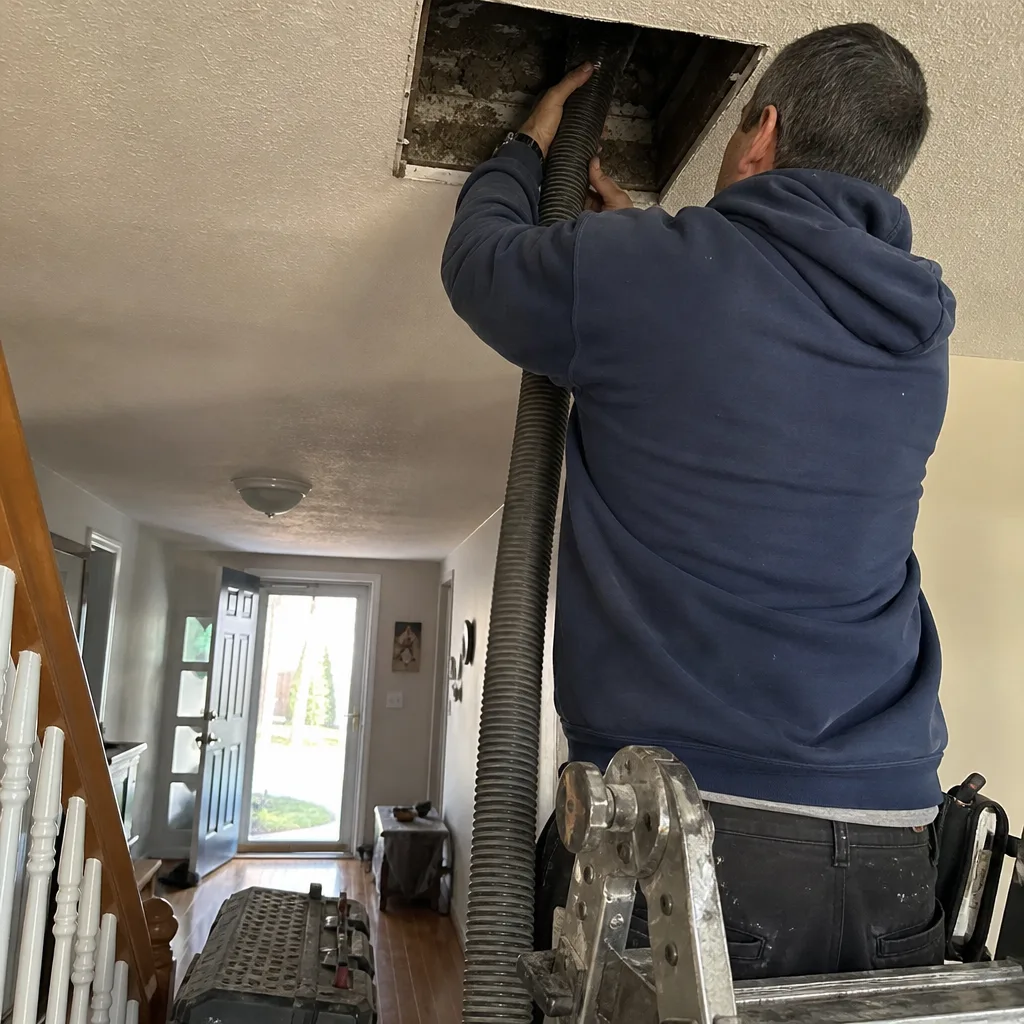 Before
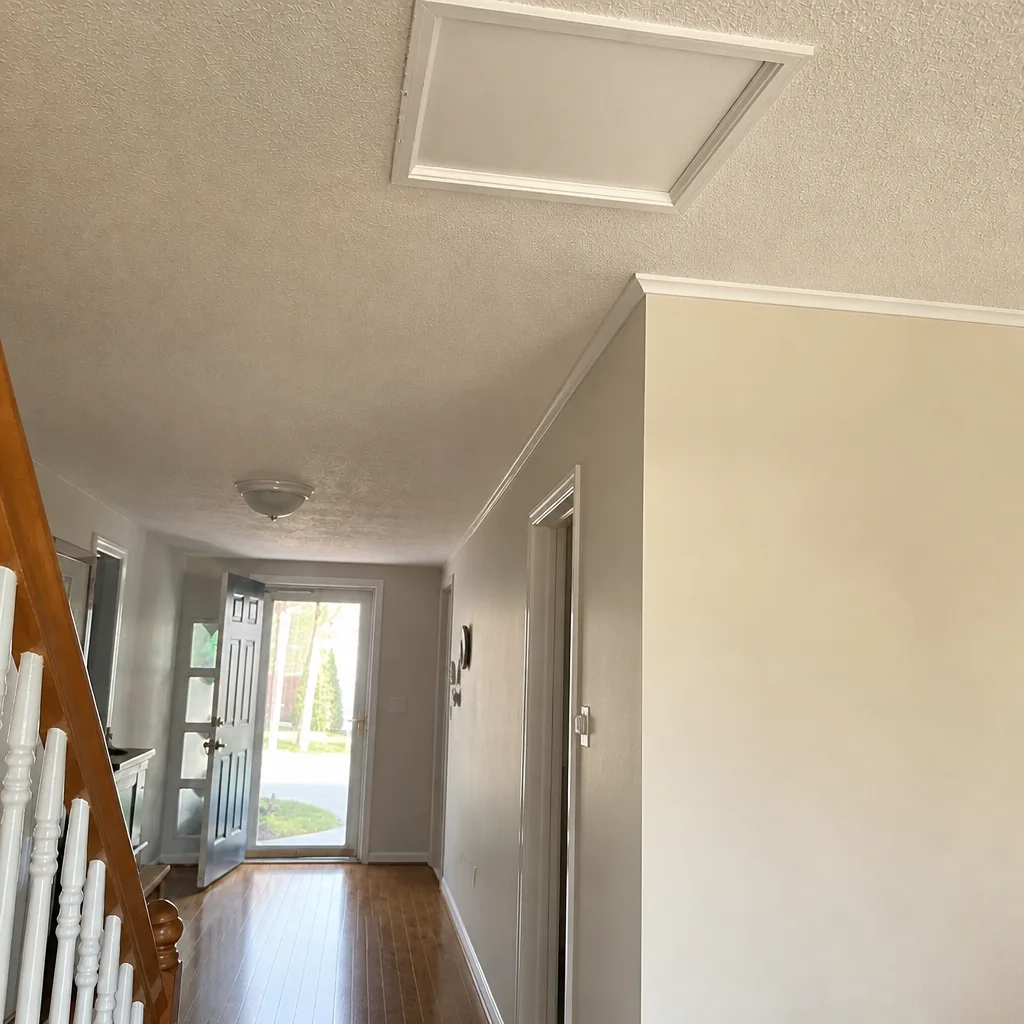 After
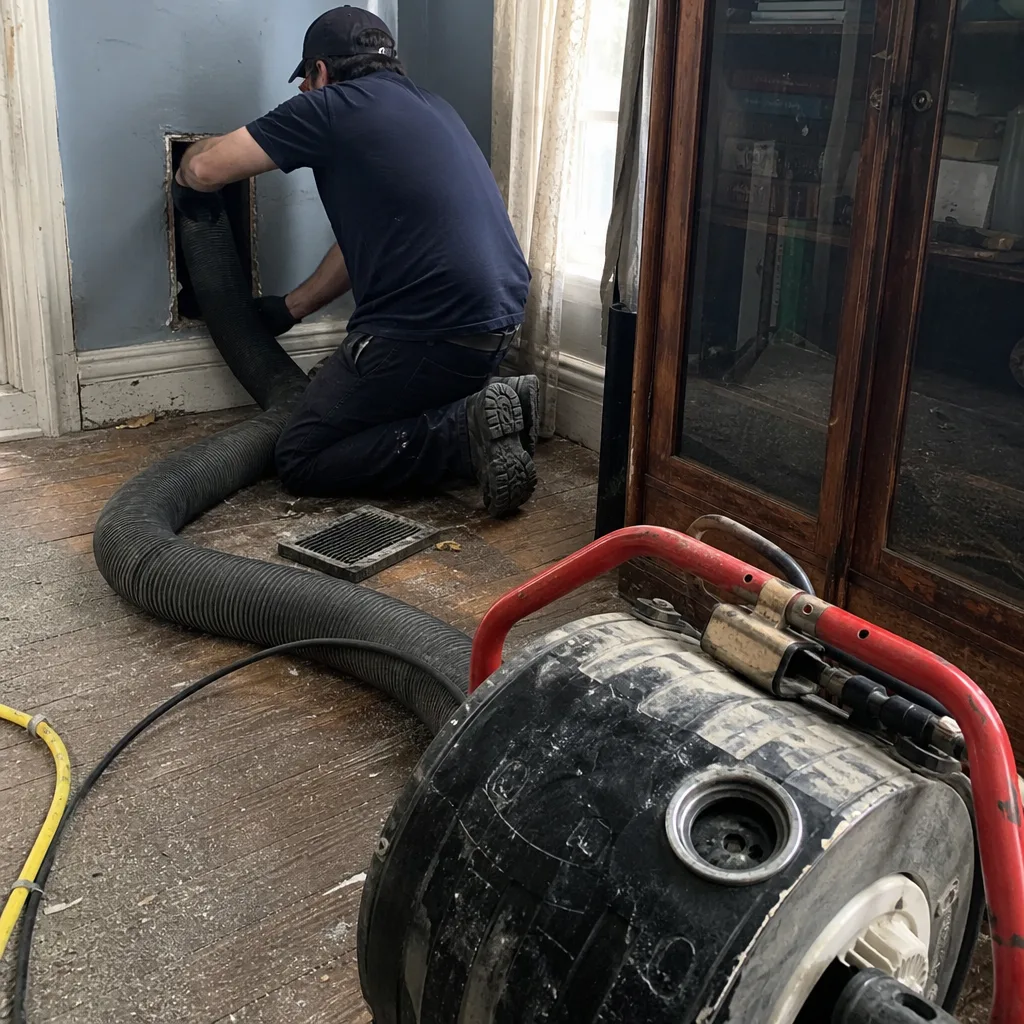 Before
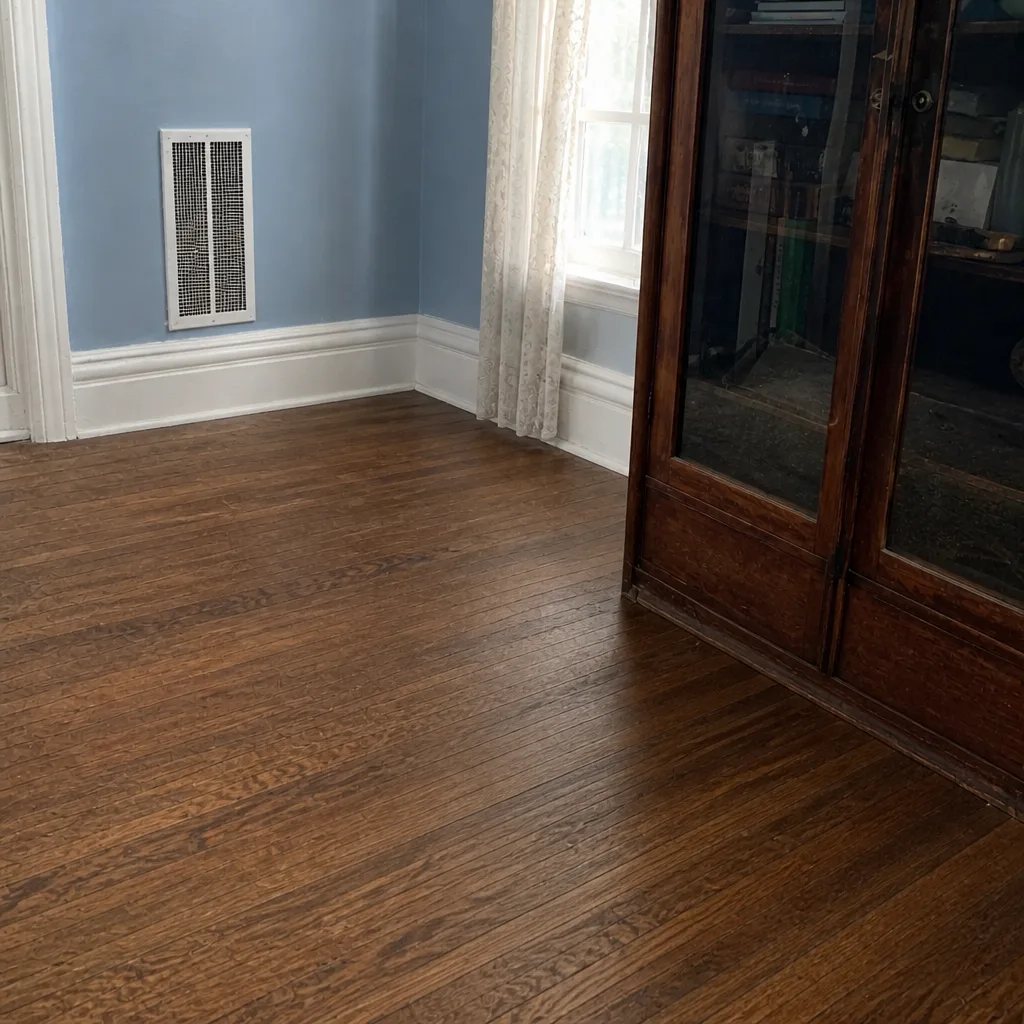 After
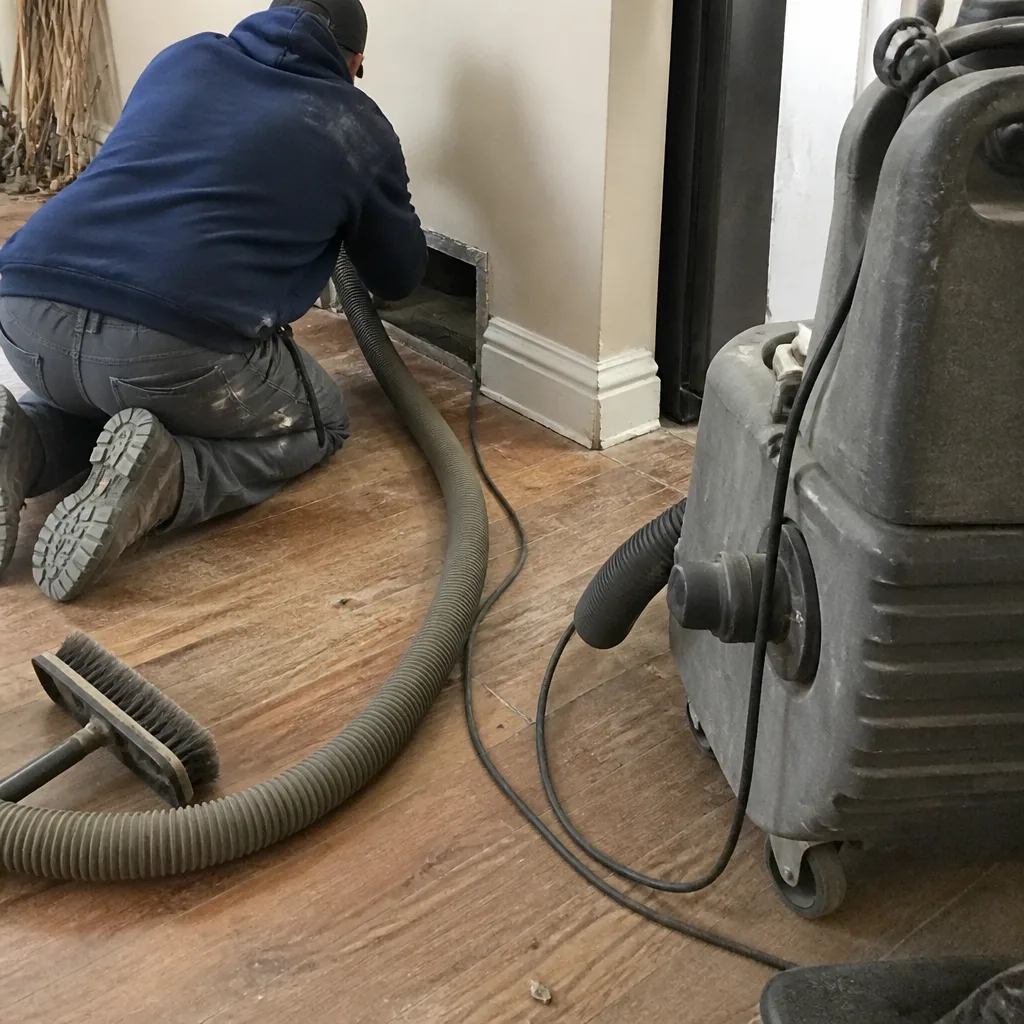 Before
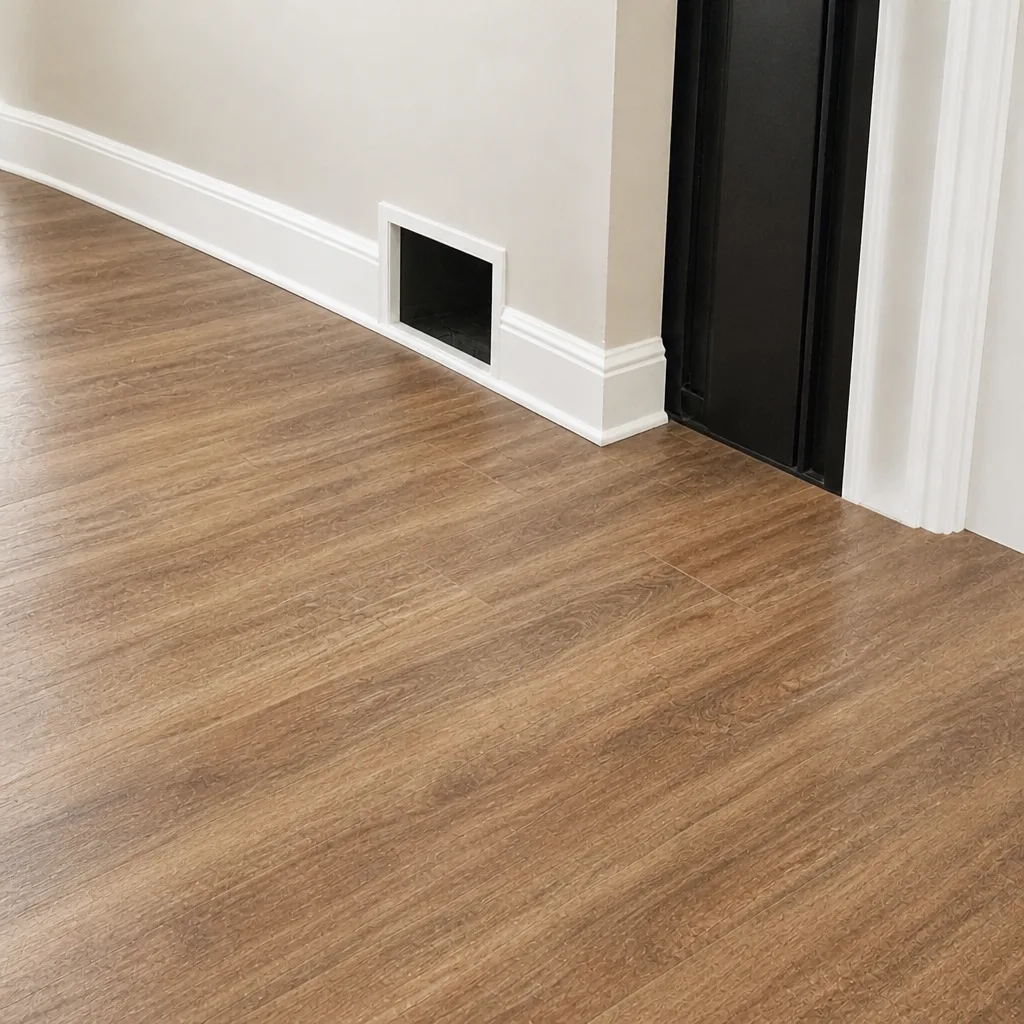 After
When to Call a Professional
Some duct issues are cosmetic. Others are not. Call a professional to inspect and clean when the situation involves visible mold growth inside ducts or on HVAC components, when a pest or rodent problem has occurred in the ductwork, when a heating or cooling system has been run without a filter, when ducts are infested with debris after a renovation or fire, or when a family member has unexplained worsening of asthma or allergy symptoms inside the home. Call also when you’ve never had the ducts cleaned and the home is more than ten years old with a history of no filter changes. These are the conditions where the investment in professional equipment actually changes the outcome. Homeowners with a dryer vent older than five years that’s never been cleaned should also consider dryer vent cleaning separately. When it’s time, HVAC cleaning handles the coil and air-handler side of the system. Air Duct Cleaning Rhawnhurst offers free estimates in Rhawnhurst. Call (888) 301-3197. We answer 24/7. Fast dispatch from 7am to 7pm, Sunday through Friday.
Frequently Asked Questions
Most whole-home air duct cleaning in the Rhawnhurst area is priced as a per-system job, not a per-vent one, and a legitimate written estimate should describe the total system being cleaned. Line-item pricing usually covers supply and return cleaning, register boots, and the plenum, with the air handler and evaporator coil optionally as a separate line. Coupons under a certain figure usually don’t include all of that. Call (888) 301-3197 for a free estimate specific to your home. We answer 24/7. Fast dispatch from 7am to 7pm, Sunday through Friday.
Cheap quotes are cheaper because the quote isn’t for the same job. The variables that change the real cost are whether negative pressure is established with a HEPA vacuum, whether every component is cleaned or only accessible duct runs, whether the plenum and air handler are included, and whether the quote was preceded by a pre-inspection. A company that skips all four can price the work lower. That isn’t necessarily a bad quote; the question is whether the cheap price comes with all four included.
Ask for before-and-after photographs of the duct interior, taken inside your ducts during the job, and a post-job walkthrough where the technician confirms each component was cleaned. A legitimate company won’t resist this. If a company can’t produce photos of your work, the only evidence you have is the invoice.
Most residential duct systems don’t need annual cleaning. A reasonable interval is every three to five years for a home with normal filter maintenance, shorter if you have pets, allergies, or recent renovations, longer if you maintain filters well and don’t smoke indoors. There is no universal rule; the right answer depends on what the pre-inspection shows.
Yes, when done correctly. The reason negative pressure matters is that it protects the HVAC equipment from damage during cleaning. Cleaning without negative pressure can push debris into the evaporator coil or blower motor, causing damage after the job. If a company can’t explain how it protects the equipment, ask why not.
Yes. Dryer vent cleaning is a dedicated service separate from duct cleaning, and it’s a fire-safety task that many duct-only companies skip. Our technicians have up to 13 years of experience with the equipment and process side of both. Call (888) 301-3197 for a free estimate on both together or separately. We answer 24/7. Fast dispatch from 7am to 7pm, Sunday through Friday.
The Bottom Line
The difference between a good duct cleaning and a bad one isn’t price, reviews, or a coupon. It’s the equipment on the truck, the process the company is willing to describe, and a written scope of work that names every component before the work starts. Ask the five questions, request equipment documentation including the vacuum make, model, and HEPA rating, and use NADCA as a floor rather than a ceiling. Get the scope in writing. If a company won’t sign a scope, they’re not ready to work in a Rhawnhurst home. That’s the whole framework. It takes about twenty minutes to apply, and it’s the best protection against the bait-and-switch patterns the FTC has been documenting in this industry for years. Call (888) 301-3197 for a free estimate. We answer 24/7. Fast dispatch from 7am to 7pm, Sunday through Friday.
Written by the team at Air Duct Cleaning Rhawnhurst.